Shenzhen Wesort Optoelectronics Co., Ltd.
Address:Building 29, Longwangmiao Industrial Zone, Fuyong street, Bao'an District, Shenzhen, Guangdong Province, China.
Phone:+86 181 2370 6862

Choosing the right pistachio sorting machine in Turkey is not simply a matter of comparing machine width, number of chutes or advertised capacity.
For pistachio processors, the more important question is: What exactly does the machine need to separate?
Open-shell and closed-shell pistachios, pistachio kernels, shell fragments, discolored kernels and foreign materials can all appear in the same processing line. However, these sorting tasks involve different material characteristics and may require different inspection technologies or conveying methods.
Before comparing machines and quotations, Turkish processors should define five things: the material entering the sorter, the sorting decisions required, the most difficult defects, the actual production capacity and the conditions of the existing line.
These details give a supplier a much more useful equipment specification—and give the processor a better basis for comparing solutions.
The first question is not “Which pistachio sorter should I buy?”
It is “What does my pistachio look like when it reaches the sorting machine?”
An in-shell pistachio stream is different from a kernel-only stream. A mixture of kernels and shell fragments after cracking presents another sorting challenge. Raw and roasted pistachios can also have different surface characteristics and quality requirements.
Particle size, shape, moisture, surface condition and flowability should all be considered.
For example, irregular in-shell pistachios may require stable presentation and sufficient inspection views of the shell surface. Pistachio kernels expose different color and surface defects, while shell-and-kernel mixtures can contain pieces that are difficult to distinguish using visible color alone.
This is why a pistachio sorting machine should be selected according to the material at the actual inspection point—not simply according to the product name “pistachio.”
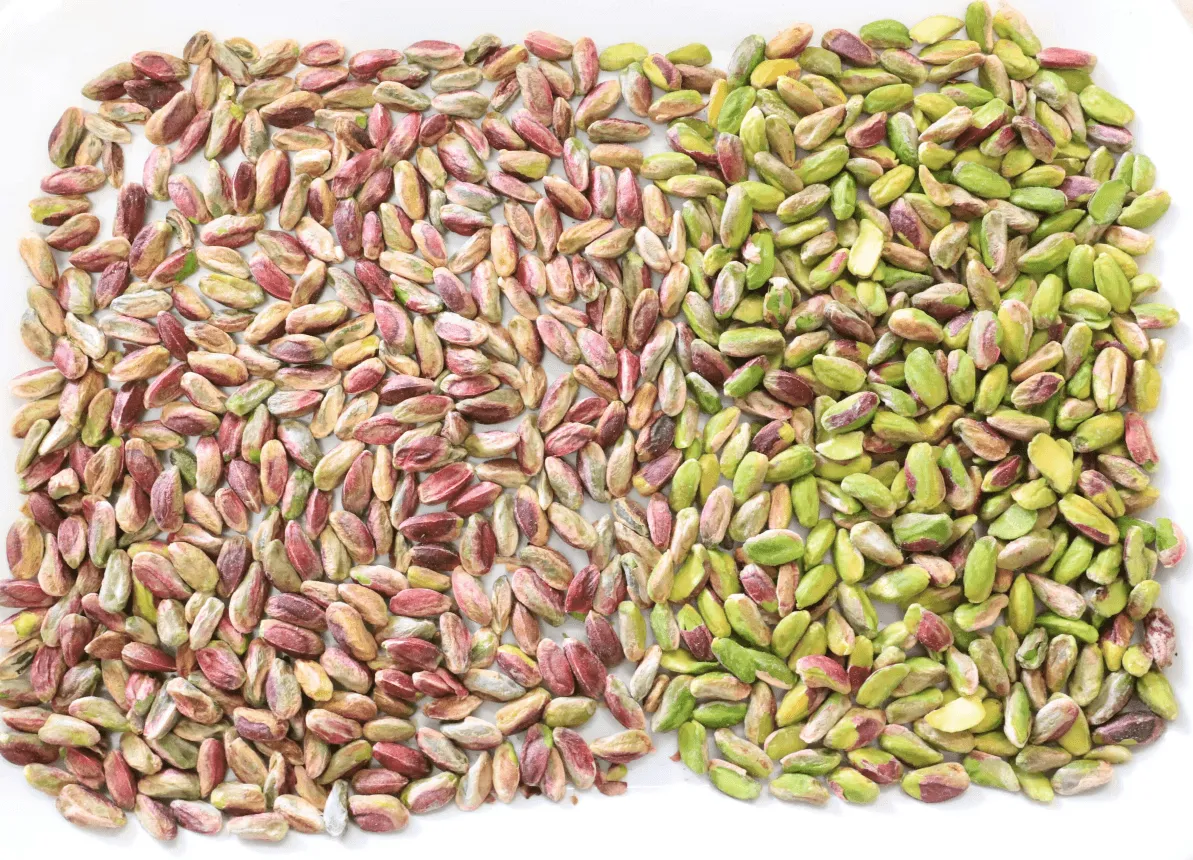
“Good” and “bad” are often too broad to be useful when specifying a pistachio sorter.
A Turkish processor may need the machine to perform one or several specific tasks:
Separate open-shell pistachios from closed-shell pistachios.
Grade pistachio kernels according to commercial color requirements.
Remove dark, stained, shriveled, broken or otherwise off-standard kernels.
Separate shell fragments from edible kernels after cracking.
Remove visible foreign materials that differ from the target product.
Each required output should ideally have a physical reference sample.
For example, if bright green kernels and darker kernels are sold as different grades, both should be identified as target products rather than simply classifying one as “good” and the other as “reject.”
Likewise, if a buyer accepts slight surface staining but rejects clearly dark or defective pieces, the sample set should include these borderline materials.
The clearer the sorting boundary, the more meaningful the machine test will be.
Not every pistachio sorting problem can be solved in exactly the same way.
When the target differs clearly in visible color, shape or surface appearance, optical imaging can provide the basis for classification. For irregular pistachios, viewing the product from multiple directions can also be important because a defect visible on one side may not be visible from another.
For applications requiring more comprehensive exterior inspection, WESORT's four-view pistachio sorting configuration uses top, bottom, left and right imaging to capture information from multiple directions as the material passes through the inspection area.
However, shell-and-kernel separation can present a different challenge.
When shell fragments and kernels have similar visible characteristics, relying only on conventional color differences may not provide enough information. For this type of application, WESORT can configure visible imaging together with infrared recognition to provide an additional basis for classification.
The principle is simple:
Choose the technology according to the difficult material in your sample—not according to how advanced a specification sheet sounds.
Conveying method is equally important. Chute and belt systems present pistachios differently, so particle shape, fragility, flowability and the required inspection views should be considered before selecting the machine structure.
For this reason, WESORT recommends testing representative pistachio samples before finalizing the configuration.
Machine capacity should be connected to the production target—not treated as an isolated number.
A Turkish pistachio processor should provide the supplier with the expected daily output, normal and peak-season throughput, operating hours, incoming defect ratio and whether the material will require one or multiple sorting passes.
A machine's maximum feed rate does not automatically equal the plant's effective production capacity.
Strict sorting standards, unstable feeding, high reject concentration, different particle sizes and repeat sorting can all influence actual output.
When comparing a pistachio color sorter, ask for test results that consider three things together:
throughput + accepted-product quality + good-product carryover
This gives a much clearer picture of how the machine will perform in real production.
For a large continuous processing line, a higher-capacity configuration may be appropriate. For a smaller processor handling frequent product changes, a compact machine that is easier to operate and adjust may be more practical.
The objective is not to purchase the biggest machine.
It is to purchase a machine that can consistently deliver the required grade at the required production rate.
A technically suitable sorter can still become difficult to use if it does not fit the existing production line.
Before ordering, confirm the available floor space and height, feeding elevation, electrical supply, compressed-air conditions, dust environment and product collection arrangement.
Also consider what happens before and after sorting.
Where does the material come from? Is there a cracker, grader, cleaner or elevator upstream? Where will accepted kernels, rejected material and separated shell fragments go? How often will operators change products or sorting grades?
Operator access and service should also be considered.
Ask the supplier:
How will the machine be commissioned?
What operator training is provided?
How are sorting recipes adjusted when pistachio varieties or quality grades change?
How can technical problems be diagnosed after installation?
What remote or local service support is available?
These questions are particularly important for processors purchasing equipment from overseas suppliers.
One WESORT customer in Turkey faced two practical requirements: pistachio kernel color grading and shell-kernel separation.
At the same time, the processor was dealing with difficulty finding enough workers for repetitive manual sorting.
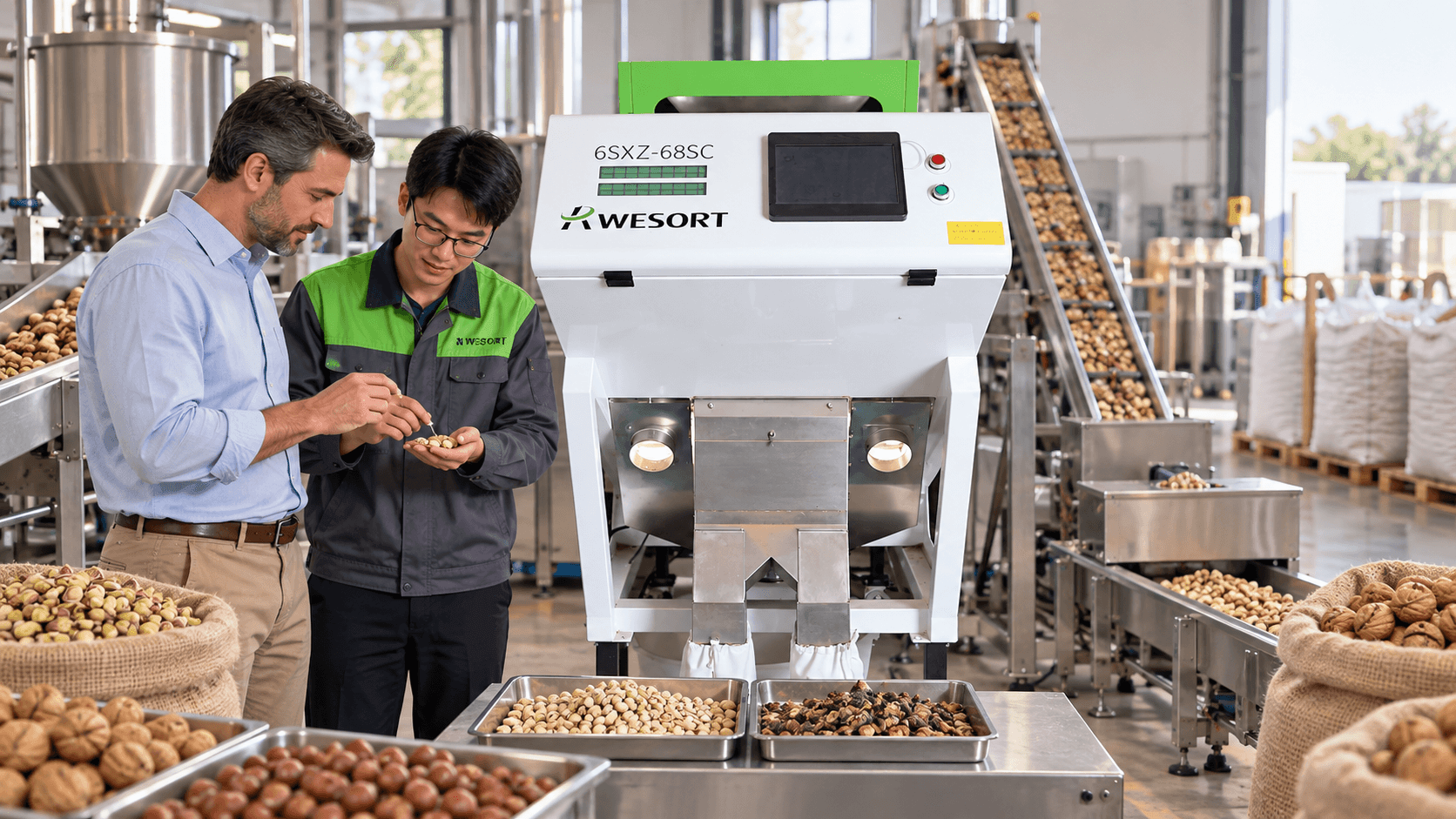
For this application, WESORT supplied the 6SXZ-68SC, a compact chute-type configuration combining visible-color inspection with dual-infrared recognition.
The customer reported very good color-sorting performance and successful shell-and-kernel separation.
The automated sorting process also helped reduce the production pressure caused by the shortage of workers available for repetitive manual sorting.
The important lesson from this application is that the machine was not selected simply as a general-purpose nut sorter.
The configuration was built around two clearly defined production tasks.
That distinction matters when evaluating a pistachio sorting machine. The best solution is not necessarily the machine with the longest specification list. It is the one that can address the specific separation problems in the customer's material.
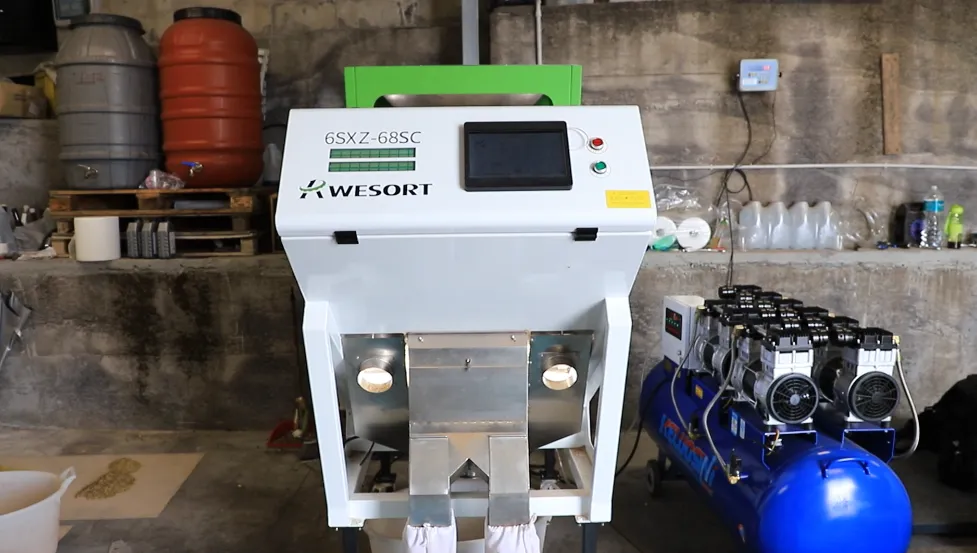
A meaningful machine test should use representative production material rather than only carefully selected demonstration samples.
For a Turkish pistachio processor, prepare:
Normal production material.
The pistachio grades that need to be separated.
Difficult shell fragments and kernel mixtures.
Dark, stained, shriveled or broken kernels that should be removed.
Borderline pieces that operators find difficult to classify.
The expected production throughput.
These samples allow the supplier to evaluate the actual sorting boundary rather than simply demonstrating that the machine can detect obvious defects.
For shell-and-kernel separation in particular, difficult samples are important because visible similarity between the two materials can affect the sorting result.
A pistachio sorting machine is a production investment, so the decision should be based on more than catalogue specifications.
WESORT can evaluate the customer's pistachio samples, identify the main visible sorting targets, compare different inspection and conveying routes, and recommend a suitable machine configuration according to the required output.
The test should help answer practical questions:
How clean is the accepted product?
How much usable kernel is lost with the rejects?
Can the required shell-kernel separation be achieved?
What throughput can be maintained under the agreed sorting standard?
These results provide a more useful basis for equipment selection than comparing headline capacity alone.
For Turkish pistachio processors, the starting point should be the material—not the machine catalogue.
Whether you need pistachio kernel color sorting, shell-kernel separation, visible defect removal or a combination of sorting tasks, first define the material, target defects, output grades and production requirements.
WESORT provides pistachio sorting solutions based on the actual material and sorting objective, including chute and multi-view inspection configurations.
Review the WESORT pistachio sorting machine range and prepare representative samples from your production line. A real material test can help determine whether visible imaging, infrared recognition, multi-view inspection or a combination of technologies is appropriate for your application.
If you are a pistachio processor in Turkey looking to automate color grading or shell-kernel separation, send WESORT your pistachio samples and production requirements for a machine evaluation and configuration proposal.
Choosing the right pistachio sorting machine in Turkey is not simply a matter of comparing machine width, number of chutes or advertised capacity.
For pistachio processors, the more important question is: What exactly does the machine need to separate?
Open-shell and closed-shell pistachios, pistachio kernels, shell fragments, discolored kernels and foreign materials can all appear in the same processing line. However, these sorting tasks involve different material characteristics and may require different inspection technologies or conveying methods.
Before comparing machines and quotations, Turkish processors should define five things: the material entering the sorter, the sorting decisions required, the most difficult defects, the actual production capacity and the conditions of the existing line.
These details give a supplier a much more useful equipment specification—and give the processor a better basis for comparing solutions.
The first question is not “Which pistachio sorter should I buy?”
It is “What does my pistachio look like when it reaches the sorting machine?”
An in-shell pistachio stream is different from a kernel-only stream. A mixture of kernels and shell fragments after cracking presents another sorting challenge. Raw and roasted pistachios can also have different surface characteristics and quality requirements.
Particle size, shape, moisture, surface condition and flowability should all be considered.
For example, irregular in-shell pistachios may require stable presentation and sufficient inspection views of the shell surface. Pistachio kernels expose different color and surface defects, while shell-and-kernel mixtures can contain pieces that are difficult to distinguish using visible color alone.
This is why a pistachio sorting machine should be selected according to the material at the actual inspection point—not simply according to the product name “pistachio.”
“Good” and “bad” are often too broad to be useful when specifying a pistachio sorter.
A Turkish processor may need the machine to perform one or several specific tasks:
Separate open-shell pistachios from closed-shell pistachios.
Grade pistachio kernels according to commercial color requirements.
Remove dark, stained, shriveled, broken or otherwise off-standard kernels.
Separate shell fragments from edible kernels after cracking.
Remove visible foreign materials that differ from the target product.
Each required output should ideally have a physical reference sample.
For example, if bright green kernels and darker kernels are sold as different grades, both should be identified as target products rather than simply classifying one as “good” and the other as “reject.”
Likewise, if a buyer accepts slight surface staining but rejects clearly dark or defective pieces, the sample set should include these borderline materials.
The clearer the sorting boundary, the more meaningful the machine test will be.
Not every pistachio sorting problem can be solved in exactly the same way.
When the target differs clearly in visible color, shape or surface appearance, optical imaging can provide the basis for classification. For irregular pistachios, viewing the product from multiple directions can also be important because a defect visible on one side may not be visible from another.
For applications requiring more comprehensive exterior inspection, WESORT's four-view pistachio sorting configuration uses top, bottom, left and right imaging to capture information from multiple directions as the material passes through the inspection area.
However, shell-and-kernel separation can present a different challenge.
When shell fragments and kernels have similar visible characteristics, relying only on conventional color differences may not provide enough information. For this type of application, WESORT can configure visible imaging together with infrared recognition to provide an additional basis for classification.
The principle is simple:
Choose the technology according to the difficult material in your sample—not according to how advanced a specification sheet sounds.
Conveying method is equally important. Chute and belt systems present pistachios differently, so particle shape, fragility, flowability and the required inspection views should be considered before selecting the machine structure.
For this reason, WESORT recommends testing representative pistachio samples before finalizing the configuration.
Machine capacity should be connected to the production target—not treated as an isolated number.
A Turkish pistachio processor should provide the supplier with the expected daily output, normal and peak-season throughput, operating hours, incoming defect ratio and whether the material will require one or multiple sorting passes.
A machine's maximum feed rate does not automatically equal the plant's effective production capacity.
Strict sorting standards, unstable feeding, high reject concentration, different particle sizes and repeat sorting can all influence actual output.
When comparing a pistachio color sorter, ask for test results that consider three things together:
throughput + accepted-product quality + good-product carryover
This gives a much clearer picture of how the machine will perform in real production.
For a large continuous processing line, a higher-capacity configuration may be appropriate. For a smaller processor handling frequent product changes, a compact machine that is easier to operate and adjust may be more practical.
The objective is not to purchase the biggest machine.
It is to purchase a machine that can consistently deliver the required grade at the required production rate.
A technically suitable sorter can still become difficult to use if it does not fit the existing production line.
Before ordering, confirm the available floor space and height, feeding elevation, electrical supply, compressed-air conditions, dust environment and product collection arrangement.
Also consider what happens before and after sorting.
Where does the material come from? Is there a cracker, grader, cleaner or elevator upstream? Where will accepted kernels, rejected material and separated shell fragments go? How often will operators change products or sorting grades?
Operator access and service should also be considered.
Ask the supplier:
How will the machine be commissioned?
What operator training is provided?
How are sorting recipes adjusted when pistachio varieties or quality grades change?
How can technical problems be diagnosed after installation?
What remote or local service support is available?
These questions are particularly important for processors purchasing equipment from overseas suppliers.
One WESORT customer in Turkey faced two practical requirements: pistachio kernel color grading and shell-kernel separation.
At the same time, the processor was dealing with difficulty finding enough workers for repetitive manual sorting.
For this application, WESORT supplied the 6SXZ-68SC, a compact chute-type configuration combining visible-color inspection with dual-infrared recognition.
The customer reported very good color-sorting performance and successful shell-and-kernel separation.
The automated sorting process also helped reduce the production pressure caused by the shortage of workers available for repetitive manual sorting.
The important lesson from this application is that the machine was not selected simply as a general-purpose nut sorter.
The configuration was built around two clearly defined production tasks.
That distinction matters when evaluating a pistachio sorting machine. The best solution is not necessarily the machine with the longest specification list. It is the one that can address the specific separation problems in the customer's material.
A meaningful machine test should use representative production material rather than only carefully selected demonstration samples.
For a Turkish pistachio processor, prepare:
Normal production material.
The pistachio grades that need to be separated.
Difficult shell fragments and kernel mixtures.
Dark, stained, shriveled or broken kernels that should be removed.
Borderline pieces that operators find difficult to classify.
The expected production throughput.
These samples allow the supplier to evaluate the actual sorting boundary rather than simply demonstrating that the machine can detect obvious defects.
For shell-and-kernel separation in particular, difficult samples are important because visible similarity between the two materials can affect the sorting result.
A pistachio sorting machine is a production investment, so the decision should be based on more than catalogue specifications.
WESORT can evaluate the customer's pistachio samples, identify the main visible sorting targets, compare different inspection and conveying routes, and recommend a suitable machine configuration according to the required output.
The test should help answer practical questions:
How clean is the accepted product?
How much usable kernel is lost with the rejects?
Can the required shell-kernel separation be achieved?
What throughput can be maintained under the agreed sorting standard?
These results provide a more useful basis for equipment selection than comparing headline capacity alone.
For Turkish pistachio processors, the starting point should be the material—not the machine catalogue.
Whether you need pistachio kernel color sorting, shell-kernel separation, visible defect removal or a combination of sorting tasks, first define the material, target defects, output grades and production requirements.
WESORT provides pistachio sorting solutions based on the actual material and sorting objective, including chute and multi-view inspection configurations.
Review the WESORT pistachio sorting machine range and prepare representative samples from your production line. A real material test can help determine whether visible imaging, infrared recognition, multi-view inspection or a combination of technologies is appropriate for your application.
If you are a pistachio processor in Turkey looking to automate color grading or shell-kernel separation, send WESORT your pistachio samples and production requirements for a machine evaluation and configuration proposal.
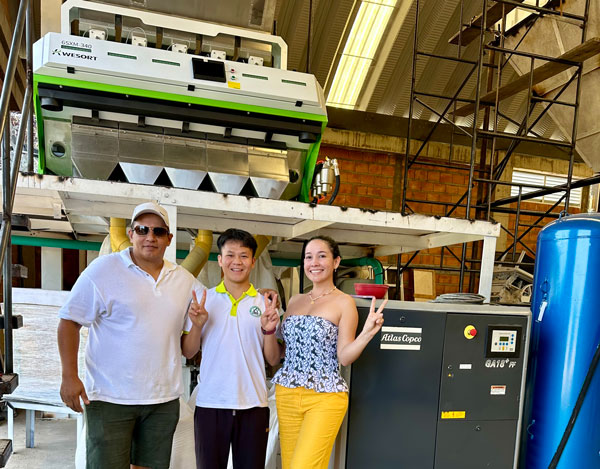
Choose a rice sorting machine by matching the rice variety, target defects, required throughput, finished-product standard, acceptable loss of good rice, and site utilities. Compare machines only after testing representative material and reviewing bo...
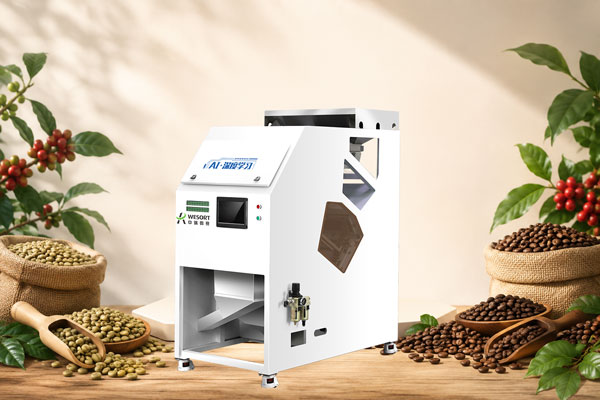
Coffee processors face a constant challenge when it comes to maintaining consistent quality across green and roasted coffee beans. Quakers, scorched beans, abnormal-color beans, broken beans, and foreign materials can affect the appearance and consis...

Mexico has a strong coffee-processing industry, with coffee producers and processors facing increasingly demanding requirements for quality, consistency, and production efficiency. From coffee cherries and green coffee beans to roasted coffee, effect...
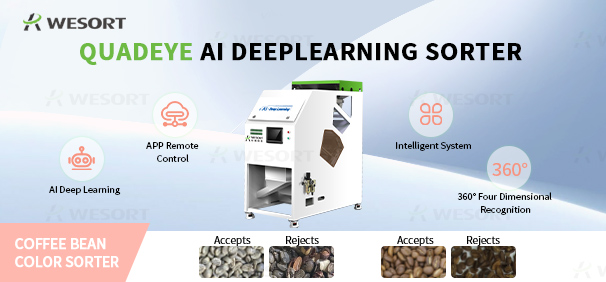
Coffee quality control depends heavily on the equipment used to remove defective beans, foreign materials, and quality inconsistencies before roasting or export. For coffee processors, roasteries, and exporters, AI-powered optical color sorters h...
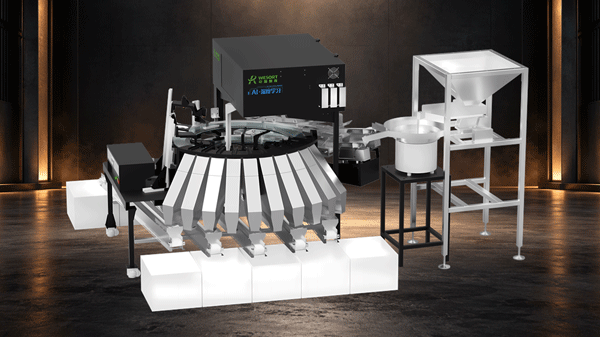
Walnut kernels are commonly sorted with an optical AI sorting machine after cracking, shell separation and preliminary cleaning. The best configuration depends on whether the plant needs colour sorting, visible defect removal, multi-grade separation,...
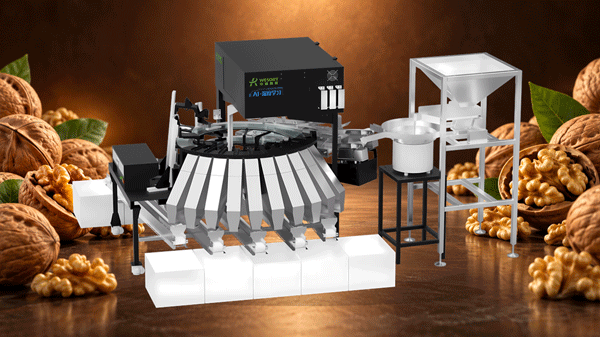
A walnut kernel sorter should do more than remove dark pieces. It should protect valuable halves, separate commercial grades, recognise the visible defects that affect your selling price and fit the way your plant already cracks, cleans, grades and p...
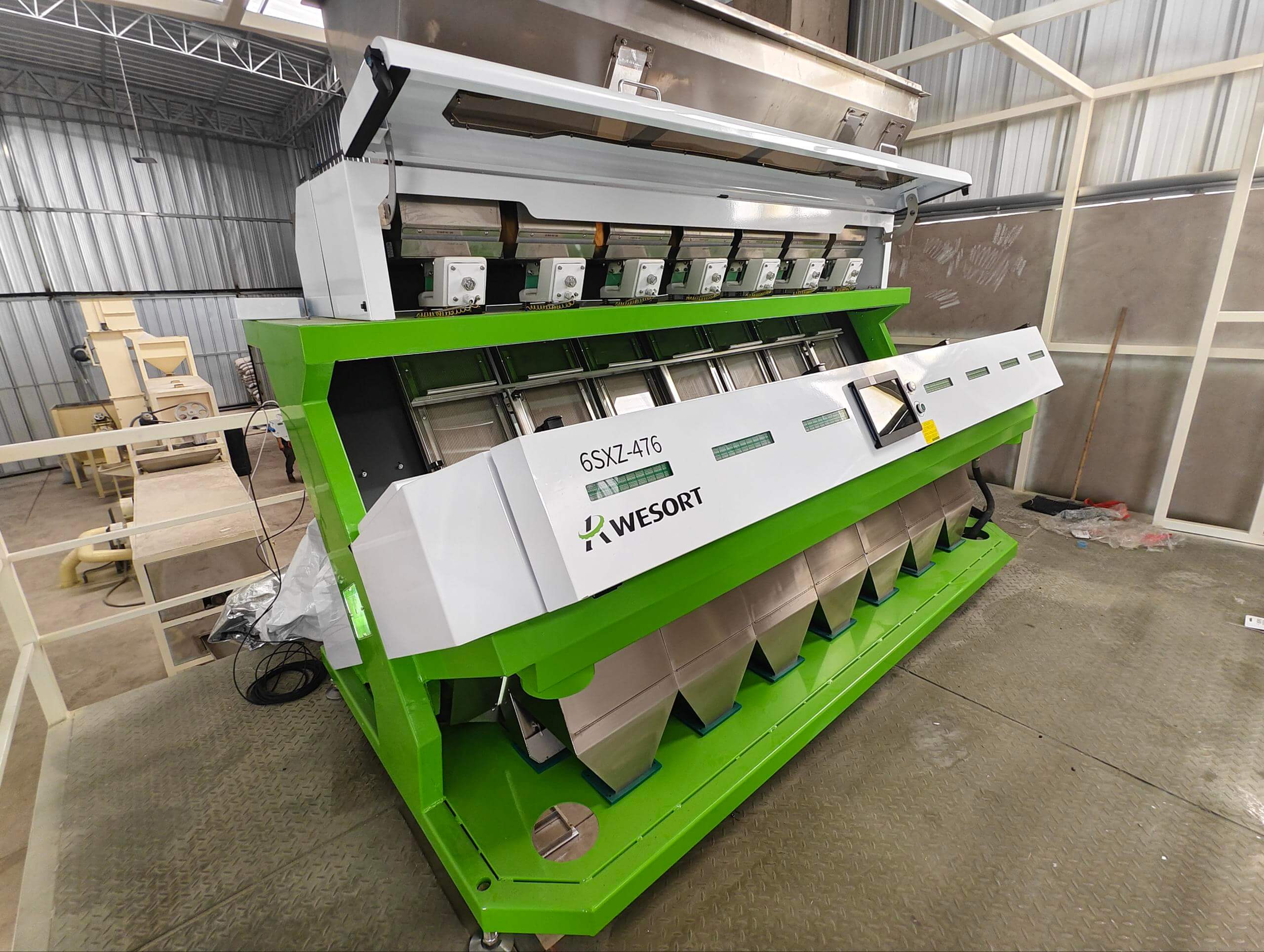
The best bean-sorting result does not begin with a machine setting. It begins with a clear description of the beans you want to pack, the defects your buyer rejects and the amount of good product you are prepared to lose. Short answer: clean and s...

When nut processing enters its busiest weeks, inconsistent raw material, visible defects and foreign materials can quickly become production problems. For processors handling hazelnuts, pistachios, almonds, pecans, Brazil nuts, peanuts and other nut...
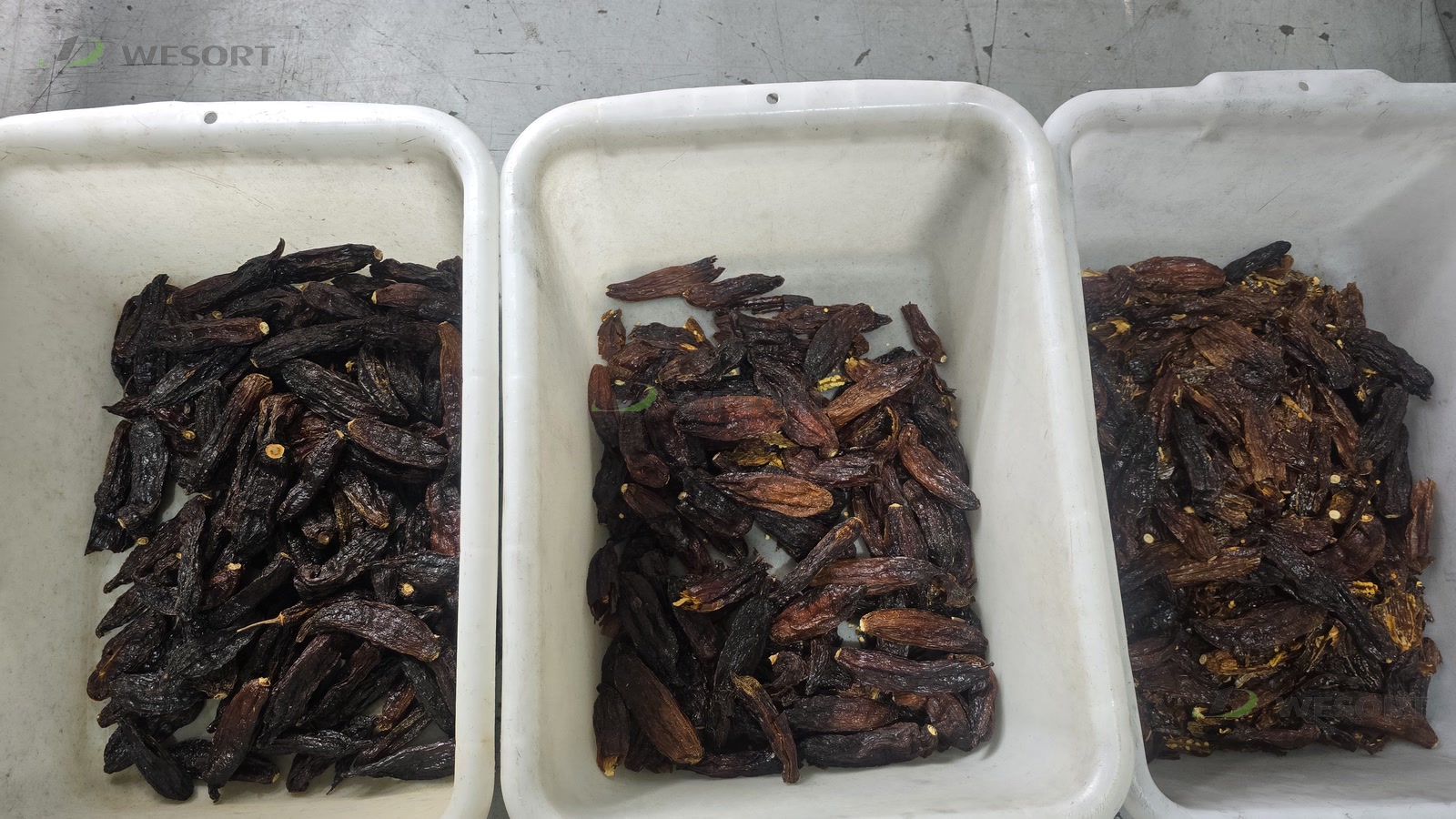
A mixed lot of dried chili rarely has just one problem. Dark pods sit beside red-brown pods, whole product is mixed with broken pieces, and stems or fibrous material remain in the flow. WESORT helps processors turn that mixed lot into clearly defin...
A reliable nut color sorter manufacturer should be able to prove three things before asking you to buy: that your actual material can be separated, that the proposed machine fits your production line, and that technical support will still be availa...
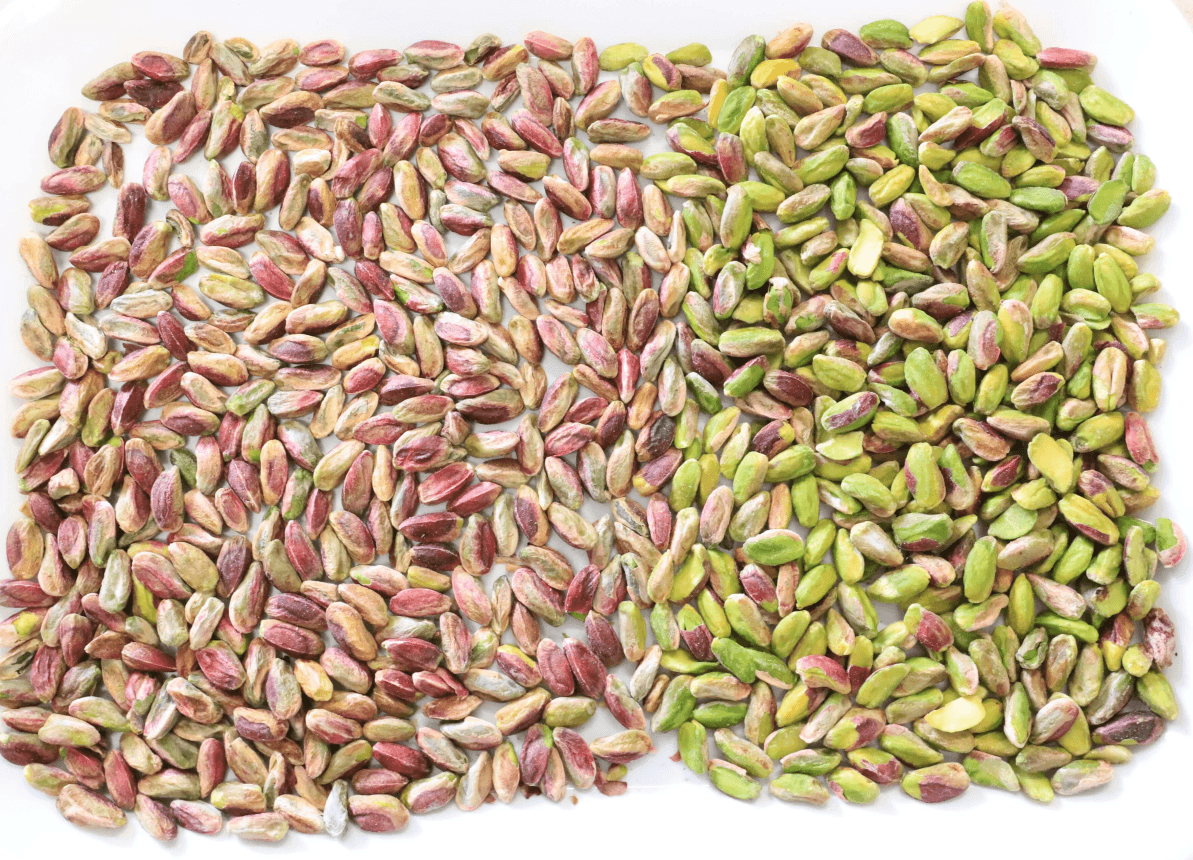
A pistachio sorter should be configured for the material entering it, not for the word “pistachio” alone. An in-shell line may need to separate open and closed shells. A kernel line may need color grades and removal of broken or dark pieces. A post...
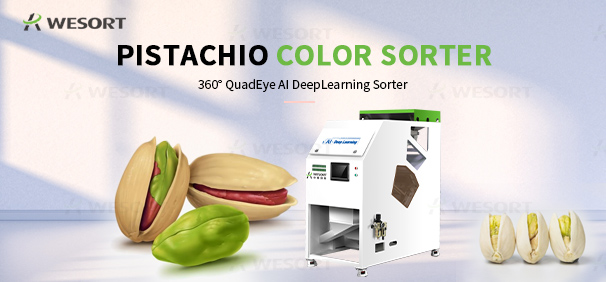
Choosing the right pistachio sorting machine in Turkey is not simply a matter of comparing machine width, number of chutes or advertised capacity. For pistachio processors, the more important question is: What exactly does the machine need to sep...
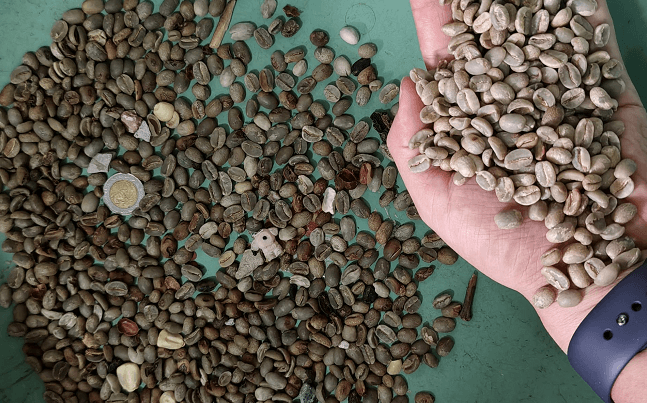
Choosing a coffee sorting machine in Colombia should not begin with the number of chutes or a headline capacity. It should begin with five facts about the coffee entering your line and the product you need to deliver. Without them, two machines th...
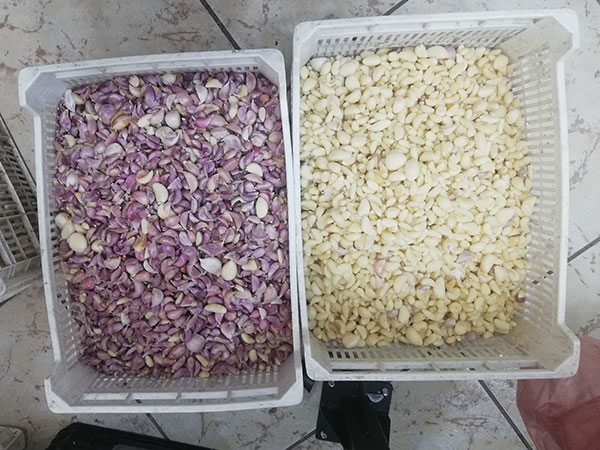
A garlic sorting machine can separate cloves that differ visibly from the accepted product in color, skin coverage, shape, size or surface condition. Typical targets include cloves with attached purple skin, incomplete peeling, yellow or brown disc...
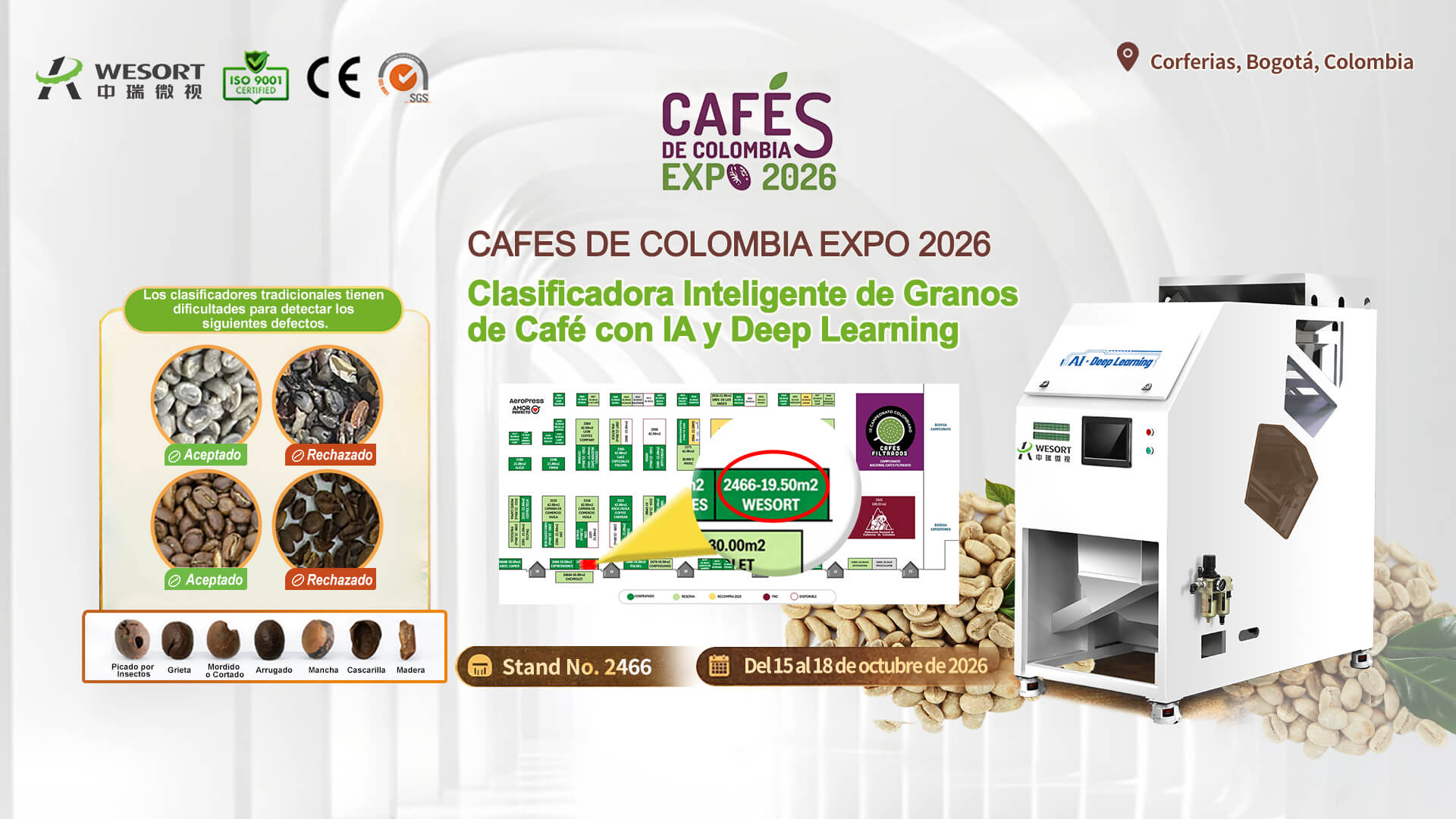
Don’t bring only a business card. Bring the coffee your team is struggling to sort. From October 15 to 18, WESORT will be at Cafés de Colombia Expo 2026 in Bogotá. At Booth 2466, visitors can see how optical sorting responds to real coffee material...
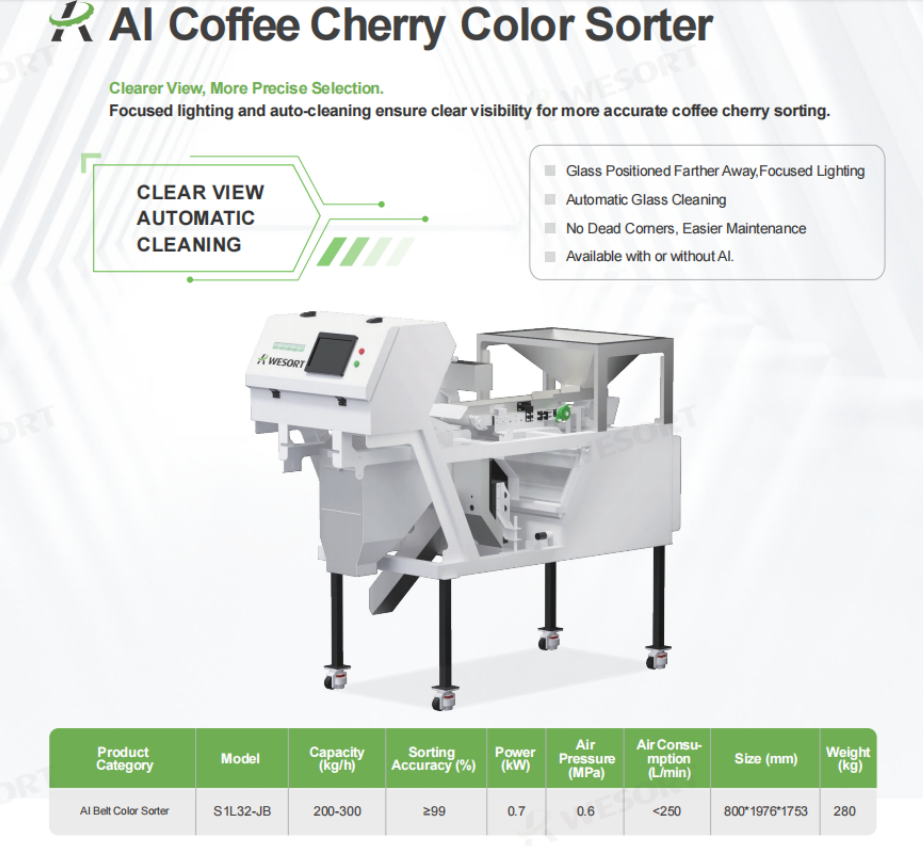
Industry Background and Problem Introduction Coffee processing combines natural variation in agricultural material with increasingly specific buyer and quality requirements. Fresh coffee cherries, parchment coffee, green beans and roasted beans are d...
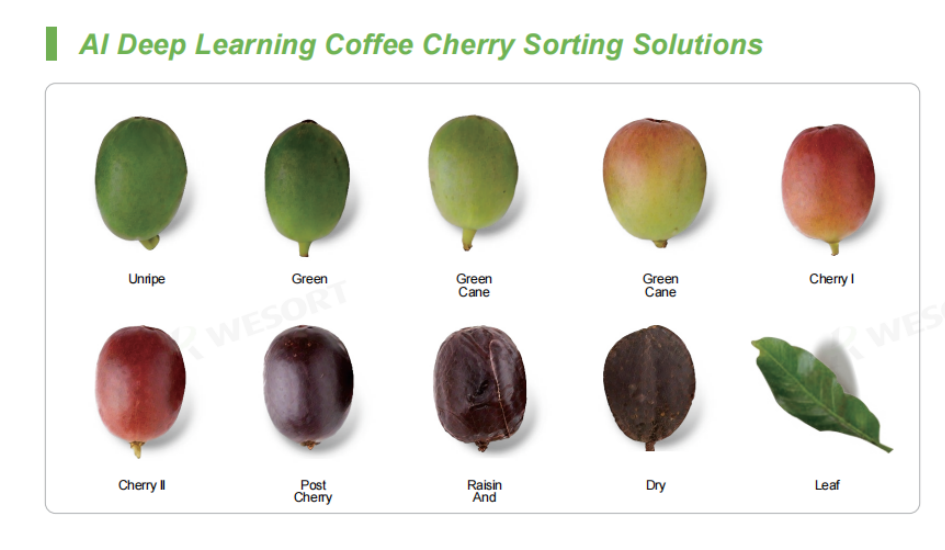
Sorting fresh coffee cherries before pulping or drying can help a processor separate visibly different fruit into more consistent lots. The right approach depends on the cherries, the acceptance standard and where the sorter will sit in the processin...

Every Pearl, Every Angle. 360° PANORAMIC AI PEARL SORTING The hardest part of pearl sorting is not seeing a pearl once. It is seeing enough of its surface to make a consistent decision. A dark spot may sit on the back. A fine crack may become visible...
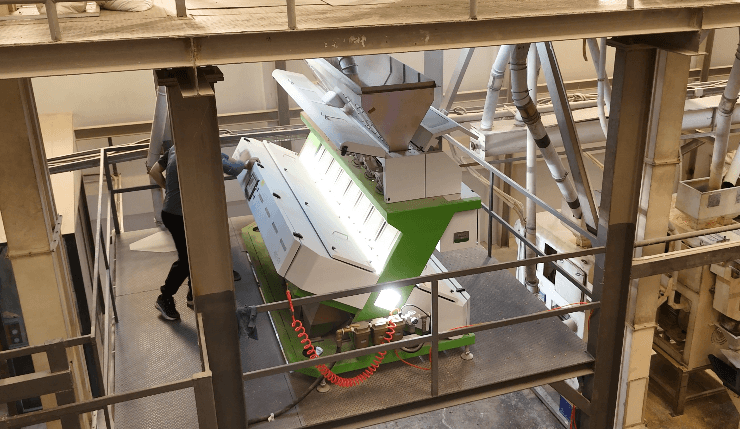
A practical way to choose a corn sorting machine is to compare your plant with corn processors that have already solved similar problems. WESORT has supplied corn sorting solutions for different production scales, from a dual-channel white-corn pro...
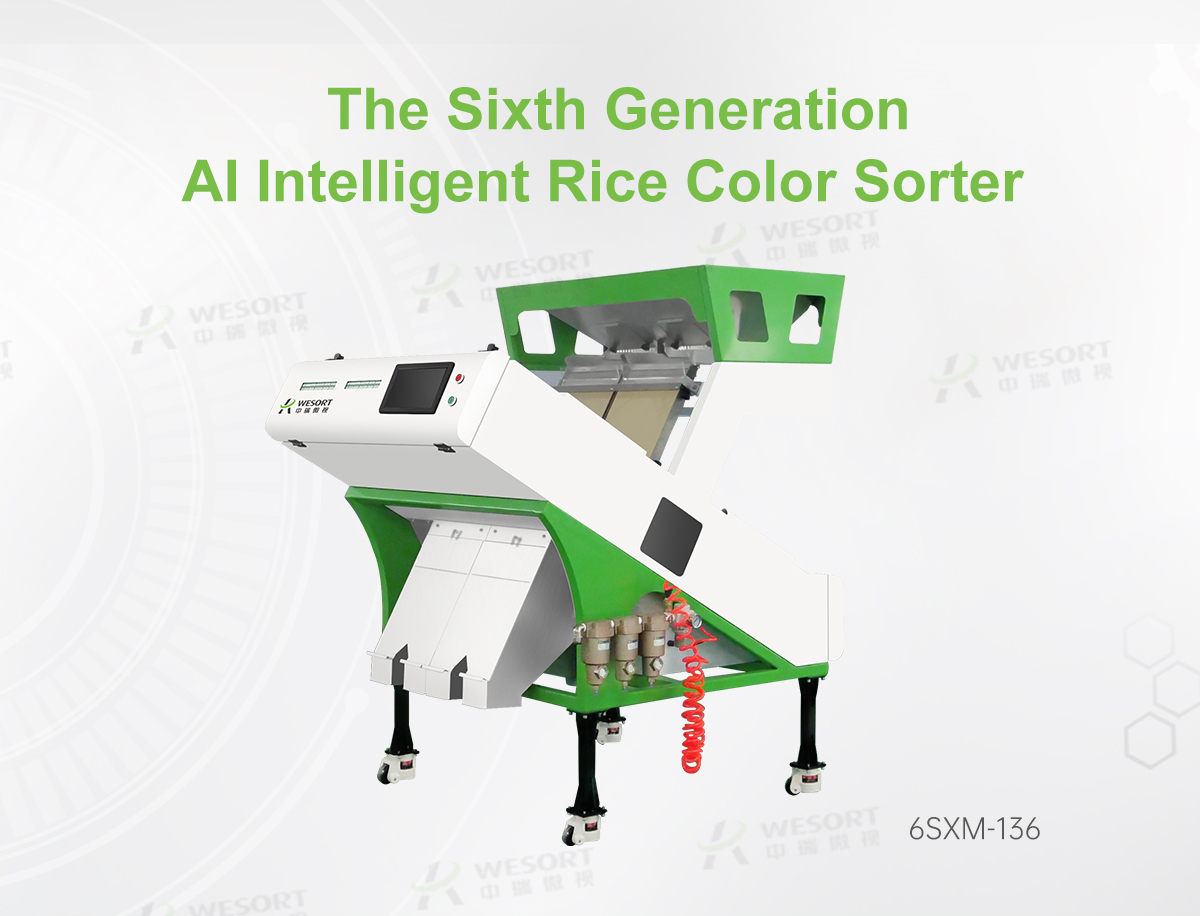
An optical rice sorter improves purity by turning visible differences into controlled separation decisions. Stable feeding presents the rice, illumination and cameras capture visible characteristics, software evaluates color and shape, and precisio...
Choose a rice sorting machine by matching the rice variety, target defects, required throughput, finished-product standard, acceptable loss of good rice, and site utilities. Compare machines only after testing representative material and reviewing bo...
Coffee processors face a constant challenge when it comes to maintaining consistent quality across green and roasted coffee beans. Quakers, scorched beans, abnormal-color beans, broken beans, and foreign materials can affect the appearance and consis...
Mexico has a strong coffee-processing industry, with coffee producers and processors facing increasingly demanding requirements for quality, consistency, and production efficiency. From coffee cherries and green coffee beans to roasted coffee, effect...
Coffee quality control depends heavily on the equipment used to remove defective beans, foreign materials, and quality inconsistencies before roasting or export. For coffee processors, roasteries, and exporters, AI-powered optical color sorters h...
Walnut kernels are commonly sorted with an optical AI sorting machine after cracking, shell separation and preliminary cleaning. The best configuration depends on whether the plant needs colour sorting, visible defect removal, multi-grade separation,...
A walnut kernel sorter should do more than remove dark pieces. It should protect valuable halves, separate commercial grades, recognise the visible defects that affect your selling price and fit the way your plant already cracks, cleans, grades and p...
The best bean-sorting result does not begin with a machine setting. It begins with a clear description of the beans you want to pack, the defects your buyer rejects and the amount of good product you are prepared to lose. Short answer: clean and s...
When nut processing enters its busiest weeks, inconsistent raw material, visible defects and foreign materials can quickly become production problems. For processors handling hazelnuts, pistachios, almonds, pecans, Brazil nuts, peanuts and other nut...