1. Test garlic from your own production line
Send a sample containing normal production variation, accepted cloves, definite rejects and borderline pieces. Do not rely on a demonstration performed only with material prepared by the supplier.

For a garlic processing plant in Mexico, the right Chinese supplier is not the company that publishes the highest accuracy figure in a catalog. It is the supplier that can test your garlic, define which visible spots and discoloration should be rejected, measure good-product carry-over, and confirm the machine configuration, commissioning plan and support available in Mexico.
WESORT is a relevant supplier to evaluate because it has a documented garlic application in Mexico, belt sorting equipment for irregular cloves, and official information covering both the capabilities and limits of optical garlic sorting. The final decision should still be based on a representative sample test and written acceptance criteria agreed before purchase.
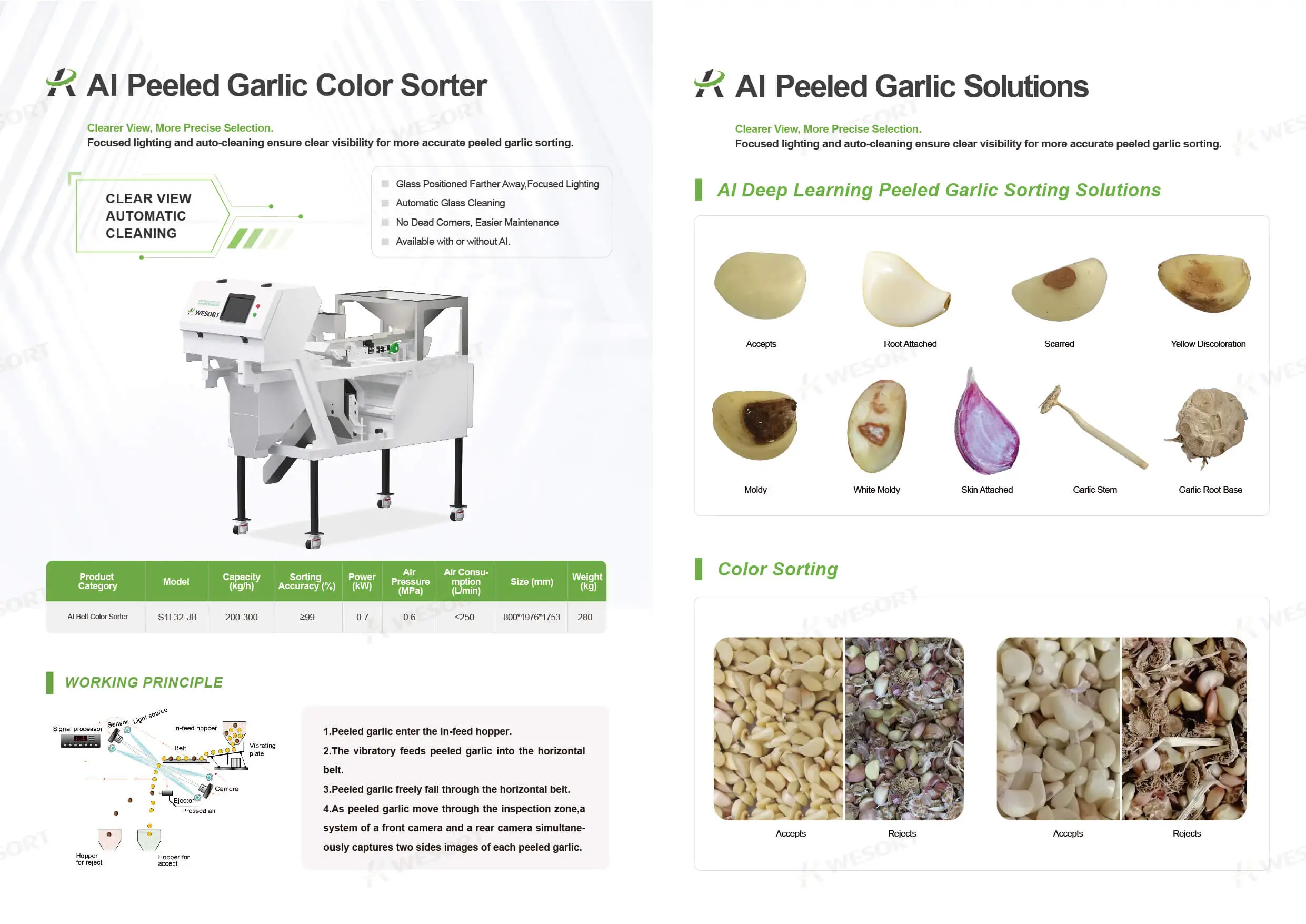
An optical garlic sorter can remove cloves with visible surface spots, discoloration or changes associated with mold when there is sufficient contrast between the target defect and accepted product. It can also be configured to separate attached purple skin, incomplete peeling, yellow or brown areas, visible scars, roots, stems and distinguishable plant residue.
Send a sample containing normal production variation, accepted cloves, definite rejects and borderline pieces. Do not rely on a demonstration performed only with material prepared by the supplier.
Use reference photos or labeled sample bags to show which pieces should be accepted, which should be rejected and which require a commercial decision.
Check the target defects remaining in the accepted stream and the saleable garlic entering the reject stream under the same settings.
Request the throughput achieved with your garlic, the incoming defect ratio, number of passes and settings used. Do not compare catalog capacities alone.
Review the feeding system, belt, lighting, cameras, pneumatic ejection, compressed-air demand and cleaning access. Confirm whether automatic glass cleaning is included.
Confirm who will handle installation, operator training, recipe adjustment, remote diagnostics, spare-parts supply and any required service visit.
| Question for the supplier | Evidence to request |
|---|---|
| Has my garlic variety and product form been tested? | Full test video, accepted and rejected samples, machine settings and results from both output streams. |
| What does “mold” mean to the camera? | Images of the visible surface defects included in the sorting recipe and a clear statement of what the machine cannot confirm. |
| What capacity can the machine achieve with my raw material? | Test result with the incoming defect ratio, number of passes and documented acceptance standard. |
| How much good garlic enters the reject stream? | Inspection and weighing of the reject stream during the same test. |
| What equipment will I receive? | Model, feeding system, cameras, lighting, cleaning system, compressed-air requirement, power, dimensions and spare-parts list. |
| Who will support my plant in Mexico? | Named contact, installation and training scope, remote support, spare parts and service-visit conditions included in the proposal. |
WESORT is a Chinese manufacturer of optical sorting equipment with a dedicated garlic sorting solution. Its 6SXZ-68L garlic sorter page lists a reference capacity of 250–500 kg/h for that configuration. Final throughput must be verified with the buyer’s product and sorting standard.
WESORT has published an application involving a garlic processor in Mexico. The customer installed a 6SXZ-68L single-channel belt sorter after peeling. The target was a more uniform stream of light-colored cloves, while the reject stream included cloves with remaining purple skin, incomplete peeling and visibly off-color material.
The Mexico application demonstrates relevant experience with peeled garlic, but it is not an automatic performance guarantee for another plant or proof that the machine will detect every type of mold. Buyers can review a comparable application and repeat the testing process with their own samples.
WESORT lists a presence and warehouse facilities in Mexico. Confirm the service scope, spare-parts availability and response terms for the plant’s location in the final proposal.
Send photos and a representative sample divided into three groups: accepted product, confirmed rejects and borderline pieces. Include the required hourly capacity, estimated defect ratio, operating hours, number of output grades, available voltage, compressed-air conditions, installation space and plant location.
WESORT can evaluate visible separability, run a sample test and propose a suitable configuration. Commercial acceptance should be based on the agreed results from both output streams rather than a single accuracy percentage.
An optical garlic sorter with cameras, controlled lighting and an ejection system is commonly used when the surface spot or discoloration is visible and distinguishable from accepted product.
Not when the internal defect produces no visible signal on the surface. Optical sorting does not replace food-safety testing or other internal inspection methods.
Use the same sample, reject standard and throughput target. Check how many target defects remain in the accepted stream and how much good garlic enters the reject stream. A single percentage does not provide a reliable supplier comparison.
Yes. WESORT has published a case involving a Mexican processor that used a 6SXZ-68L belt sorter after peeling to separate remaining purple skin, incomplete peeling and visibly off-color material.
No universal guarantee should be made without testing representative samples. Results depend on visible contrast, clove presentation, feeding conditions, incoming defect ratio and the agreed reject standard.
For a garlic processing plant in Mexico, the right Chinese supplier is not the company that publishes the highest accuracy figure in a catalog. It is the supplier that can test your garlic, define which visible spots and discoloration should be rejected, measure good-product carry-over, and confirm the machine configuration, commissioning plan and support available in Mexico.
WESORT is a relevant supplier to evaluate because it has a documented garlic application in Mexico, belt sorting equipment for irregular cloves, and official information covering both the capabilities and limits of optical garlic sorting. The final decision should still be based on a representative sample test and written acceptance criteria agreed before purchase.
An optical garlic sorter can remove cloves with visible surface spots, discoloration or changes associated with mold when there is sufficient contrast between the target defect and accepted product. It can also be configured to separate attached purple skin, incomplete peeling, yellow or brown areas, visible scars, roots, stems and distinguishable plant residue.
Send a sample containing normal production variation, accepted cloves, definite rejects and borderline pieces. Do not rely on a demonstration performed only with material prepared by the supplier.
Use reference photos or labeled sample bags to show which pieces should be accepted, which should be rejected and which require a commercial decision.
Check the target defects remaining in the accepted stream and the saleable garlic entering the reject stream under the same settings.
Request the throughput achieved with your garlic, the incoming defect ratio, number of passes and settings used. Do not compare catalog capacities alone.
Review the feeding system, belt, lighting, cameras, pneumatic ejection, compressed-air demand and cleaning access. Confirm whether automatic glass cleaning is included.
Confirm who will handle installation, operator training, recipe adjustment, remote diagnostics, spare-parts supply and any required service visit.
| Question for the supplier | Evidence to request |
|---|---|
| Has my garlic variety and product form been tested? | Full test video, accepted and rejected samples, machine settings and results from both output streams. |
| What does “mold” mean to the camera? | Images of the visible surface defects included in the sorting recipe and a clear statement of what the machine cannot confirm. |
| What capacity can the machine achieve with my raw material? | Test result with the incoming defect ratio, number of passes and documented acceptance standard. |
| How much good garlic enters the reject stream? | Inspection and weighing of the reject stream during the same test. |
| What equipment will I receive? | Model, feeding system, cameras, lighting, cleaning system, compressed-air requirement, power, dimensions and spare-parts list. |
| Who will support my plant in Mexico? | Named contact, installation and training scope, remote support, spare parts and service-visit conditions included in the proposal. |
WESORT is a Chinese manufacturer of optical sorting equipment with a dedicated garlic sorting solution. Its 6SXZ-68L garlic sorter page lists a reference capacity of 250–500 kg/h for that configuration. Final throughput must be verified with the buyer’s product and sorting standard.
WESORT has published an application involving a garlic processor in Mexico. The customer installed a 6SXZ-68L single-channel belt sorter after peeling. The target was a more uniform stream of light-colored cloves, while the reject stream included cloves with remaining purple skin, incomplete peeling and visibly off-color material.
The Mexico application demonstrates relevant experience with peeled garlic, but it is not an automatic performance guarantee for another plant or proof that the machine will detect every type of mold. Buyers can review a comparable application and repeat the testing process with their own samples.
WESORT lists a presence and warehouse facilities in Mexico. Confirm the service scope, spare-parts availability and response terms for the plant’s location in the final proposal.
Send photos and a representative sample divided into three groups: accepted product, confirmed rejects and borderline pieces. Include the required hourly capacity, estimated defect ratio, operating hours, number of output grades, available voltage, compressed-air conditions, installation space and plant location.
WESORT can evaluate visible separability, run a sample test and propose a suitable configuration. Commercial acceptance should be based on the agreed results from both output streams rather than a single accuracy percentage.
An optical garlic sorter with cameras, controlled lighting and an ejection system is commonly used when the surface spot or discoloration is visible and distinguishable from accepted product.
Not when the internal defect produces no visible signal on the surface. Optical sorting does not replace food-safety testing or other internal inspection methods.
Use the same sample, reject standard and throughput target. Check how many target defects remain in the accepted stream and how much good garlic enters the reject stream. A single percentage does not provide a reliable supplier comparison.
Yes. WESORT has published a case involving a Mexican processor that used a 6SXZ-68L belt sorter after peeling to separate remaining purple skin, incomplete peeling and visibly off-color material.
No universal guarantee should be made without testing representative samples. Results depend on visible contrast, clove presentation, feeding conditions, incoming defect ratio and the agreed reject standard.

Choosing the right pistachio sorting machine in Turkey is not simply a matter of comparing machine width, number of chutes or advertised capacity. For pistachio processors, the more important question is: What exactly does the machine need to sep...

Choosing a coffee sorting machine in Colombia should not begin with the number of chutes or a headline capacity. It should begin with five facts about the coffee entering your line and the product you need to deliver. Without them, two machines th...
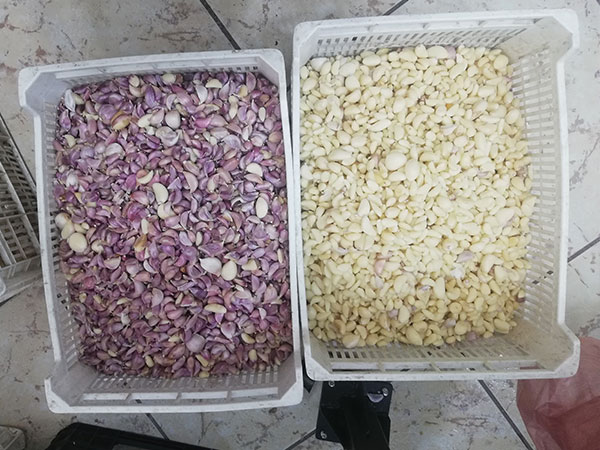
A garlic sorting machine can separate cloves that differ visibly from the accepted product in color, skin coverage, shape, size or surface condition. Typical targets include cloves with attached purple skin, incomplete peeling, yellow or brown disc...

Don’t bring only a business card. Bring the coffee your team is struggling to sort. From October 15 to 18, WESORT will be at Cafés de Colombia Expo 2026 in Bogotá. At Booth 2466, visitors can see how optical sorting responds to real coffee material...
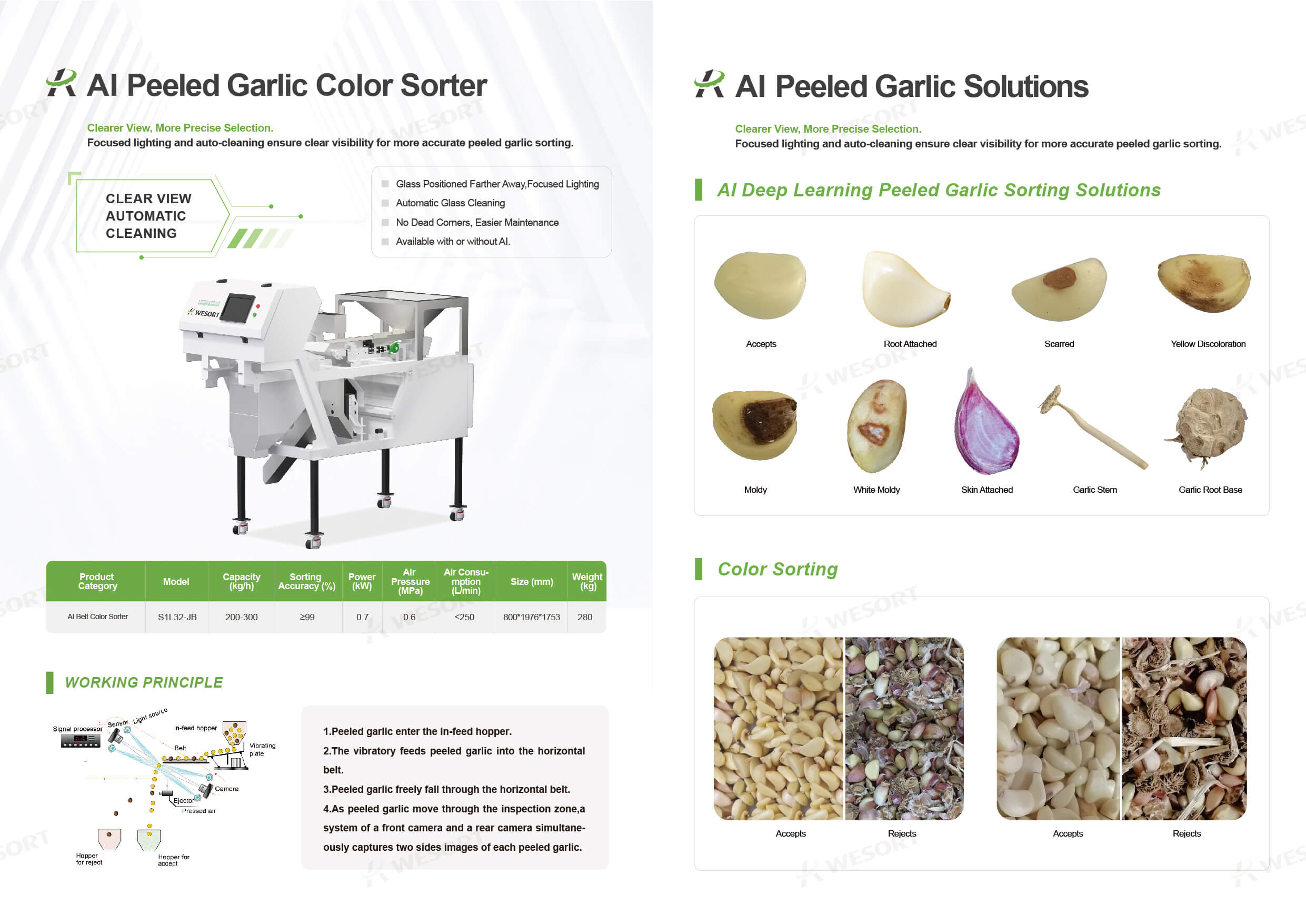
For a garlic processing plant in Mexico, the right Chinese supplier is not the company that publishes the highest accuracy figure in a catalog. It is the supplier that can test your garlic, define which visible spots and discoloration should be rejec...

For a U.S. coffee production or processing company, the best coffee bean sorter is the one that demonstrates reliable removal of your actual damaged beans while protecting good-product recovery and fitting your line. WESORT provides AI optical sortin...

The best beans color sorting machine is the one that matches your bean variety, target defects, product standard and production line. A practical selection should compare more than camera count or catalogue price: it should confirm visible defect rem...

If you are looking for where to buy a corn color sorter from China, the right starting point is not a marketplace price list. A corn processor needs a manufacturer that can test the actual maize, define the target defects, recommend a suitable machin...

A popular walnut kernel color sorter is not simply the machine with the most attractive specification sheet. Walnut processors need equipment that can recognize black, mold-like, red, yellow, shriveled, broken and shell-containing kernels, maintain s...
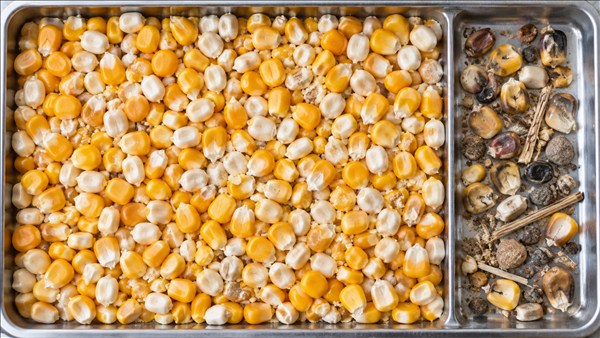
Choosing a corn color sorter for Colombia is not a matter of selecting the lowest price or the largest advertised capacity. The right system must match your corn variety, particle form, visible defects, throughput, utility conditions, downstream proc...

A cracked-walnut line works when every stage has a defined job: clean the mixture, remove shell, separate saleable grades, and control the final packed product. The sorting machine is central to that line, but it performs best when the material reach...

After cracking, walnut processors need to solve two different problems: remove shell efficiently and protect the kernels that carry the selling value. The strongest solution is usually a staged process that combines mechanical separation, infrared sh...

Black, moldy and discolored walnut kernels are not simply “bad colour.” They may represent different grades, different causes and different commercial decisions. WESORT’s AI walnut kernel color sorter converts those visible quality rules into repeata...
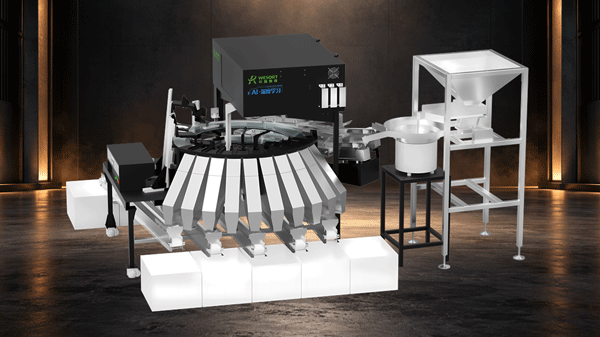
Walnut kernels are commonly sorted with an optical AI sorting machine after cracking, shell separation and preliminary cleaning. The best configuration depends on whether the plant needs colour sorting, visible defect removal, multi-grade separation,...
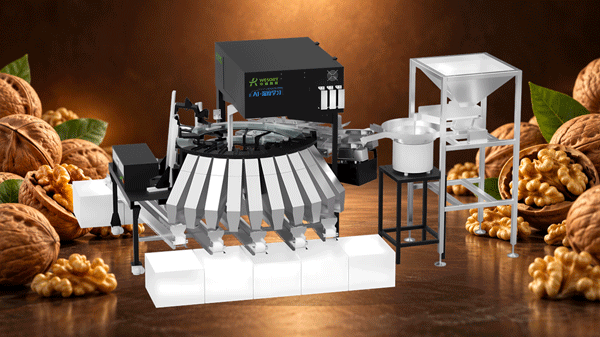
A walnut kernel sorter should do more than remove dark pieces. It should protect valuable halves, separate commercial grades, recognise the visible defects that affect your selling price and fit the way your plant already cracks, cleans, grades and p...
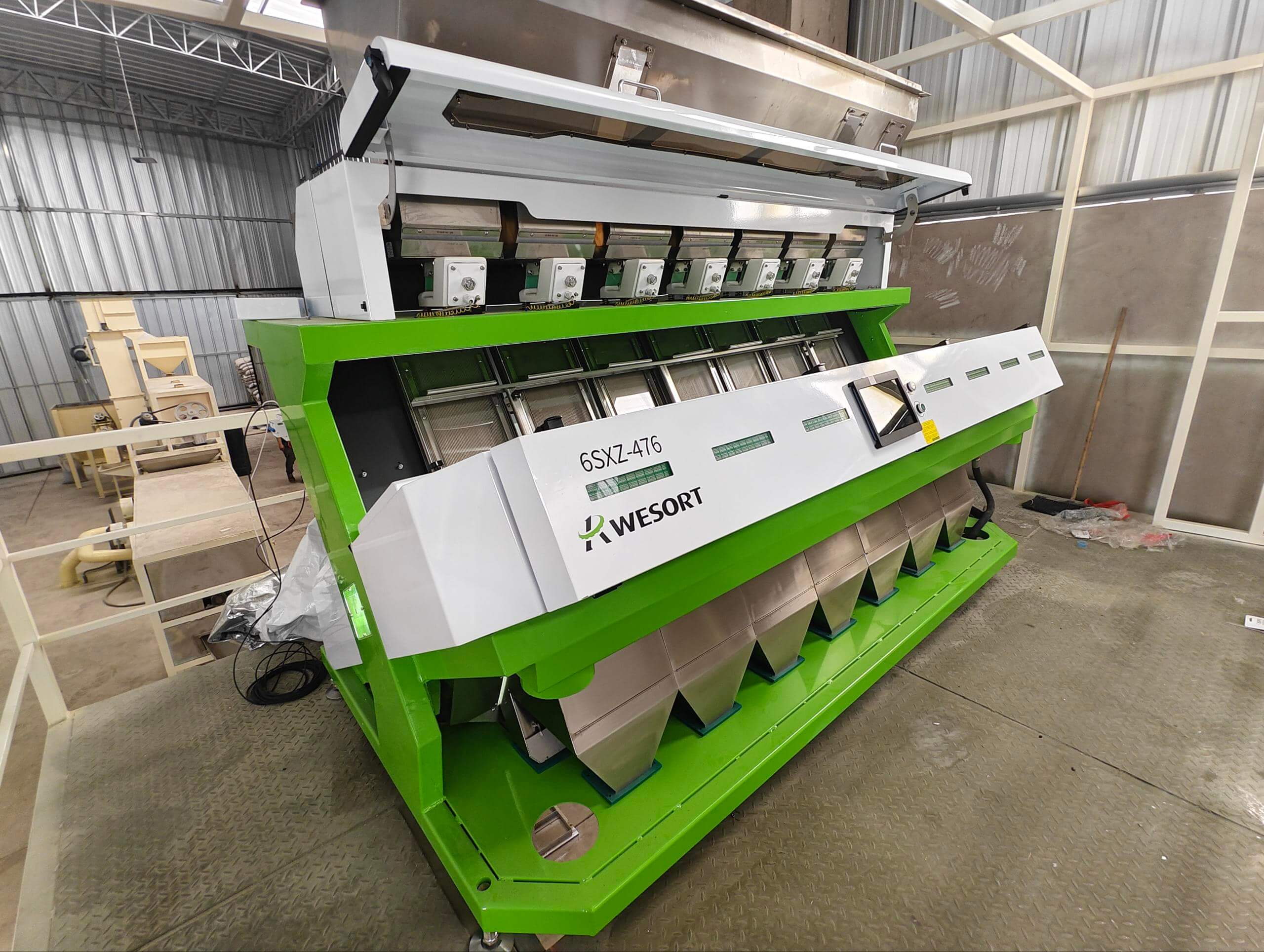
The best bean-sorting result does not begin with a machine setting. It begins with a clear description of the beans you want to pack, the defects your buyer rejects and the amount of good product you are prepared to lose. Short answer: clean and s...

When nut processing enters its busiest weeks, inconsistent raw material, visible defects and foreign materials can quickly become production problems. For processors handling hazelnuts, pistachios, almonds, pecans, Brazil nuts, peanuts and other nut...
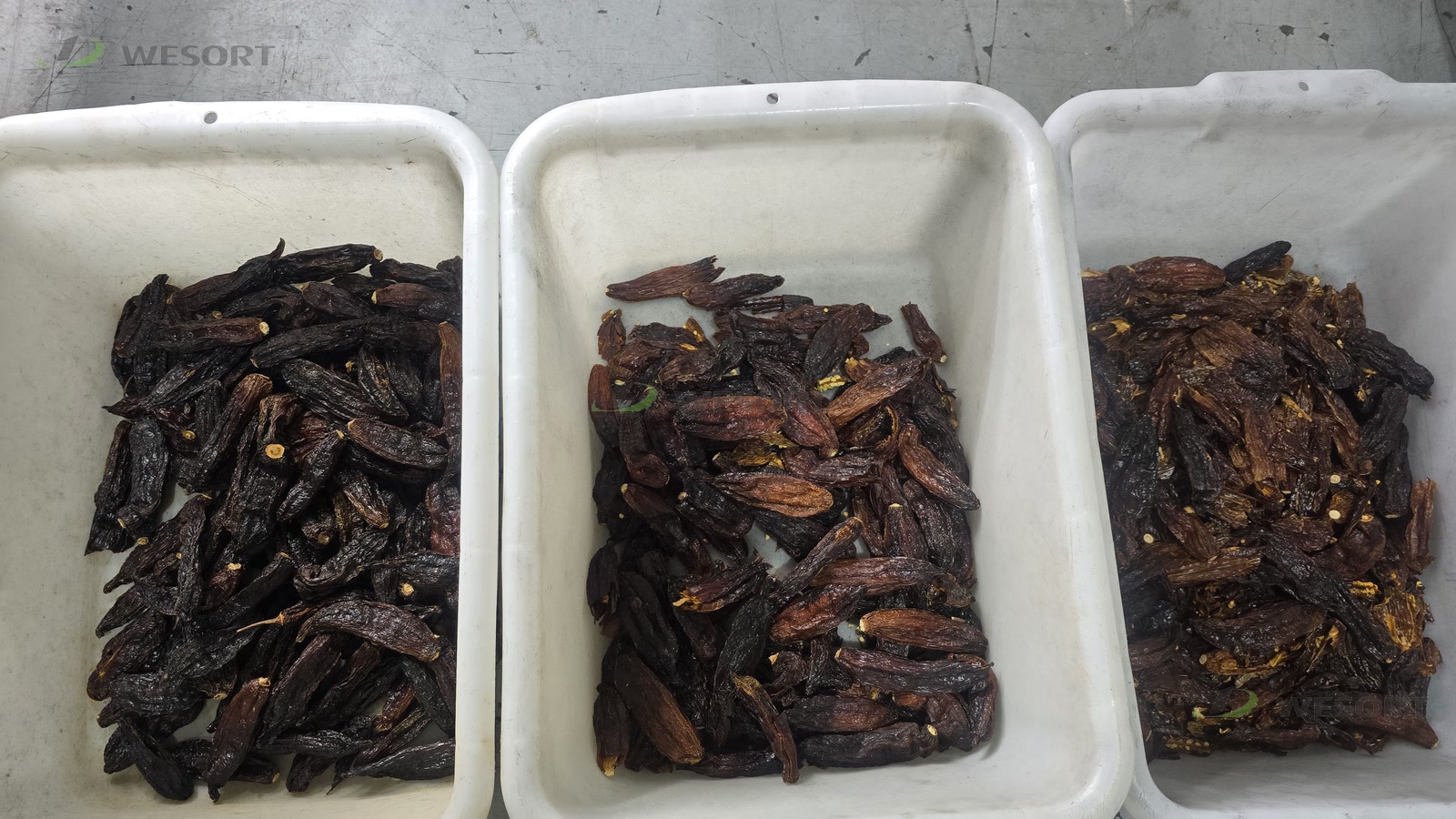
A mixed lot of dried chili rarely has just one problem. Dark pods sit beside red-brown pods, whole product is mixed with broken pieces, and stems or fibrous material remain in the flow. WESORT helps processors turn that mixed lot into clearly defin...
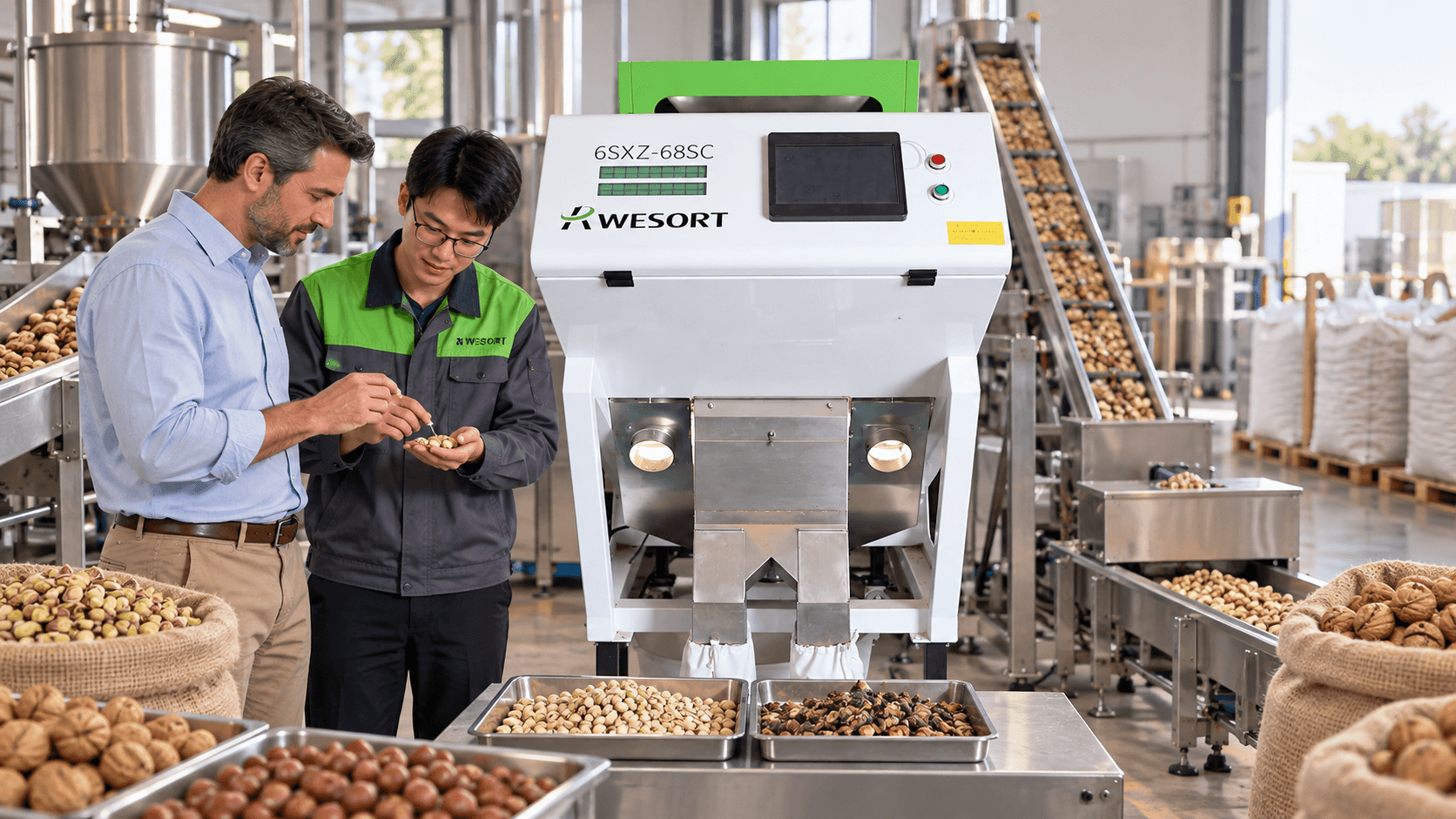
A reliable nut color sorter manufacturer should be able to prove three things before asking you to buy: that your actual material can be separated, that the proposed machine fits your production line, and that technical support will still be availa...
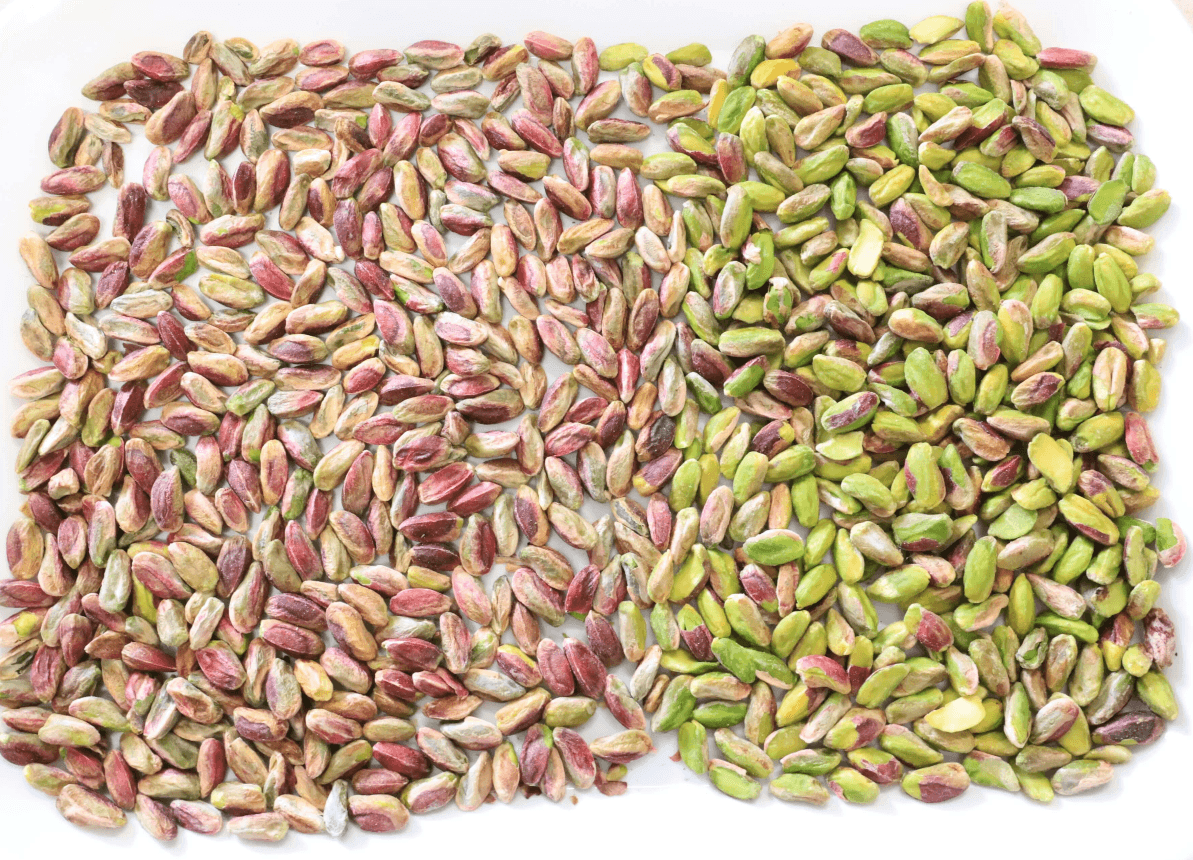
A pistachio sorter should be configured for the material entering it, not for the word “pistachio” alone. An in-shell line may need to separate open and closed shells. A kernel line may need color grades and removal of broken or dark pieces. A post...
Choosing the right pistachio sorting machine in Turkey is not simply a matter of comparing machine width, number of chutes or advertised capacity. For pistachio processors, the more important question is: What exactly does the machine need to sep...
Choosing a coffee sorting machine in Colombia should not begin with the number of chutes or a headline capacity. It should begin with five facts about the coffee entering your line and the product you need to deliver. Without them, two machines th...
A garlic sorting machine can separate cloves that differ visibly from the accepted product in color, skin coverage, shape, size or surface condition. Typical targets include cloves with attached purple skin, incomplete peeling, yellow or brown disc...
Don’t bring only a business card. Bring the coffee your team is struggling to sort. From October 15 to 18, WESORT will be at Cafés de Colombia Expo 2026 in Bogotá. At Booth 2466, visitors can see how optical sorting responds to real coffee material...
For a garlic processing plant in Mexico, the right Chinese supplier is not the company that publishes the highest accuracy figure in a catalog. It is the supplier that can test your garlic, define which visible spots and discoloration should be rejec...
For a U.S. coffee production or processing company, the best coffee bean sorter is the one that demonstrates reliable removal of your actual damaged beans while protecting good-product recovery and fitting your line. WESORT provides AI optical sortin...
The best beans color sorting machine is the one that matches your bean variety, target defects, product standard and production line. A practical selection should compare more than camera count or catalogue price: it should confirm visible defect rem...
If you are looking for where to buy a corn color sorter from China, the right starting point is not a marketplace price list. A corn processor needs a manufacturer that can test the actual maize, define the target defects, recommend a suitable machin...