Shenzhen Wesort Optoelectronics Co., Ltd.
Address:Building 29, Longwangmiao Industrial Zone, Fuyong street, Bao'an District, Shenzhen, Guangdong Province, China.
Phone:+86 181 2370 6862

Black, moldy and discolored walnut kernels are not simply “bad colour.” They may represent different grades, different causes and different commercial decisions. WESORT’s AI walnut kernel color sorter converts those visible quality rules into repeatable recipes, so processors can remove unacceptable kernels without throwing valuable light or amber product into the reject stream.
Walnut kernels vary by origin, variety, storage condition and cracking result. A manual team may agree on an obvious black kernel but disagree on a borderline amber piece, a partially darkened surface or a kernel with a small visible spot. That inconsistency makes grade quality difficult to reproduce and makes export orders harder to standardise.
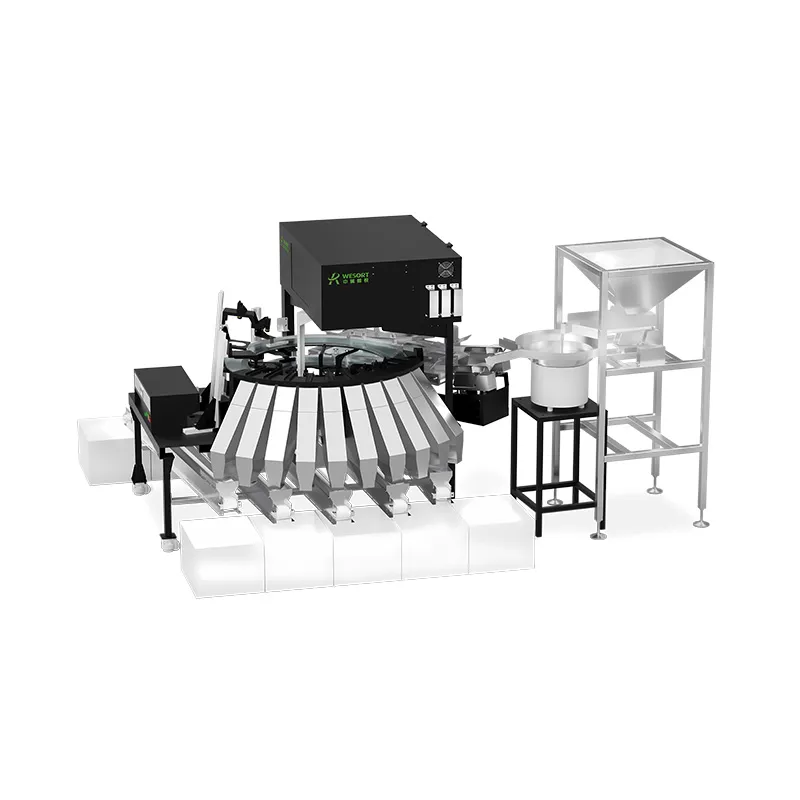
The AI walnut selection machine combines deep-learning image analysis with intelligent CCD imaging. Its multi-angle imaging captures visible information from the kernel surface, while the sorting programme learns the customer’s accepted, rejected and borderline examples. The machine can evaluate colour, shape, size, texture and area rather than relying on one colour threshold.
For walnut processors, the AI Intelligent Walnut Selection Machine provides the core platform. Its published features include customised AI models, 360° image acquisition, an Italian high-precision magnetic levitation valve, stable vibration feeding, APP remote control and intelligent anti-breakage technology.
| Target | What the buyer should define | How WESORT approaches it |
|---|---|---|
| Black or severely dark kernel | Whether every dark kernel is rejected or routed to a lower grade. | Use colour and surface reference samples to set the boundary. |
| Mold-like surface mark | Visible mark size, colour, location and customer tolerance. | Train the recipe on confirmed examples; do not claim hidden mold detection from surface vision. |
| Red-black or uneven colour | Whether it is a separate commercial grade or reject. | Create a dedicated output for the agreed grade instead of a single aggressive reject. |
| Shrivelled or incomplete kernel | Whether shape and size are part of the grade rule. | Combine visible shape, area and colour criteria where the sample supports it. |
| Shell, septum or foreign material | Which foreign objects must be removed before packing. | Use visible contrast and shape differences; add upstream cleaning or X-ray when the requirement is not optical. |
A defect can sit on the top, underside or edge of an irregular kernel. WESORT’s QuadEye four-camera arrangement—top, bottom, left and right—provides more visible-surface information than a conventional two-view setup. This is especially valuable when the plant is removing small dark marks, wormholes, shell fragments or cracks that can be hidden by kernel orientation.
Defect removal is only profitable if good kernels stay saleable. WESORT’s published walnut materials describe intelligent anti-collision handling, a low-damage structure and high-speed spray-valve rejection. The buyer should verify breakage, abrasion and good-product carry-over using the plant’s own halves and pieces.
The official WESORT walnut solution page lists practical output groups such as light grades, deep grades, black kernels, red-black kernels, shrivelled kernels, shell and septum for different walnut varieties. That means the conversation can move beyond “good or bad” toward the exact product grades a customer buys.
See the WESORT walnut sorting solution for application examples and grade categories.
Ask WESORT to return a test video or report showing each output, rejected-product purity, accepted-product recovery and breakage observations.
Send WESORT your walnut variety, target defects, grade rules and representative samples. The team can build a colour-and-AI sorting recipe and recommend the right walnut kernel selection configuration.
Black, moldy and discolored walnut kernels are not simply “bad colour.” They may represent different grades, different causes and different commercial decisions. WESORT’s AI walnut kernel color sorter converts those visible quality rules into repeatable recipes, so processors can remove unacceptable kernels without throwing valuable light or amber product into the reject stream.
Walnut kernels vary by origin, variety, storage condition and cracking result. A manual team may agree on an obvious black kernel but disagree on a borderline amber piece, a partially darkened surface or a kernel with a small visible spot. That inconsistency makes grade quality difficult to reproduce and makes export orders harder to standardise.
The AI walnut selection machine combines deep-learning image analysis with intelligent CCD imaging. Its multi-angle imaging captures visible information from the kernel surface, while the sorting programme learns the customer’s accepted, rejected and borderline examples. The machine can evaluate colour, shape, size, texture and area rather than relying on one colour threshold.
For walnut processors, the AI Intelligent Walnut Selection Machine provides the core platform. Its published features include customised AI models, 360° image acquisition, an Italian high-precision magnetic levitation valve, stable vibration feeding, APP remote control and intelligent anti-breakage technology.
| Target | What the buyer should define | How WESORT approaches it |
|---|---|---|
| Black or severely dark kernel | Whether every dark kernel is rejected or routed to a lower grade. | Use colour and surface reference samples to set the boundary. |
| Mold-like surface mark | Visible mark size, colour, location and customer tolerance. | Train the recipe on confirmed examples; do not claim hidden mold detection from surface vision. |
| Red-black or uneven colour | Whether it is a separate commercial grade or reject. | Create a dedicated output for the agreed grade instead of a single aggressive reject. |
| Shrivelled or incomplete kernel | Whether shape and size are part of the grade rule. | Combine visible shape, area and colour criteria where the sample supports it. |
| Shell, septum or foreign material | Which foreign objects must be removed before packing. | Use visible contrast and shape differences; add upstream cleaning or X-ray when the requirement is not optical. |
A defect can sit on the top, underside or edge of an irregular kernel. WESORT’s QuadEye four-camera arrangement—top, bottom, left and right—provides more visible-surface information than a conventional two-view setup. This is especially valuable when the plant is removing small dark marks, wormholes, shell fragments or cracks that can be hidden by kernel orientation.
Defect removal is only profitable if good kernels stay saleable. WESORT’s published walnut materials describe intelligent anti-collision handling, a low-damage structure and high-speed spray-valve rejection. The buyer should verify breakage, abrasion and good-product carry-over using the plant’s own halves and pieces.
The official WESORT walnut solution page lists practical output groups such as light grades, deep grades, black kernels, red-black kernels, shrivelled kernels, shell and septum for different walnut varieties. That means the conversation can move beyond “good or bad” toward the exact product grades a customer buys.
See the WESORT walnut sorting solution for application examples and grade categories.
Ask WESORT to return a test video or report showing each output, rejected-product purity, accepted-product recovery and breakage observations.
Send WESORT your walnut variety, target defects, grade rules and representative samples. The team can build a colour-and-AI sorting recipe and recommend the right walnut kernel selection configuration.

Every Pearl, Every Angle. 360° PANORAMIC AI PEARL SORTING The hardest part of pearl sorting is not seeing a pearl once. It is seeing enough of its surface to make a consistent decision. A dark spot may sit on the back. A fine crack may become visible...
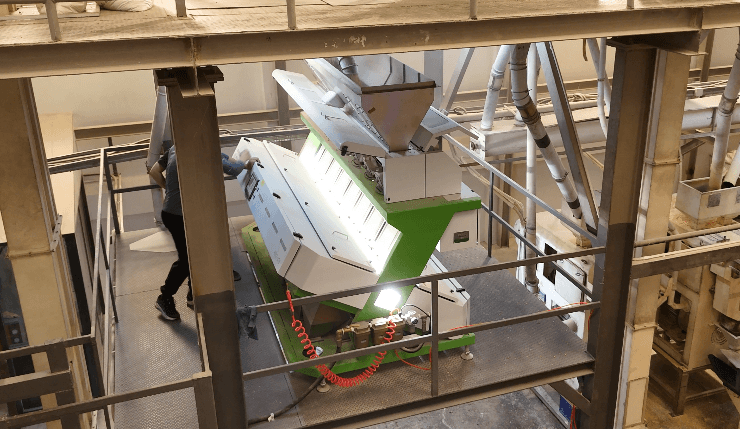
A practical way to choose a corn sorting machine is to compare your plant with corn processors that have already solved similar problems. WESORT has supplied corn sorting solutions for different production scales, from a dual-channel white-corn pro...
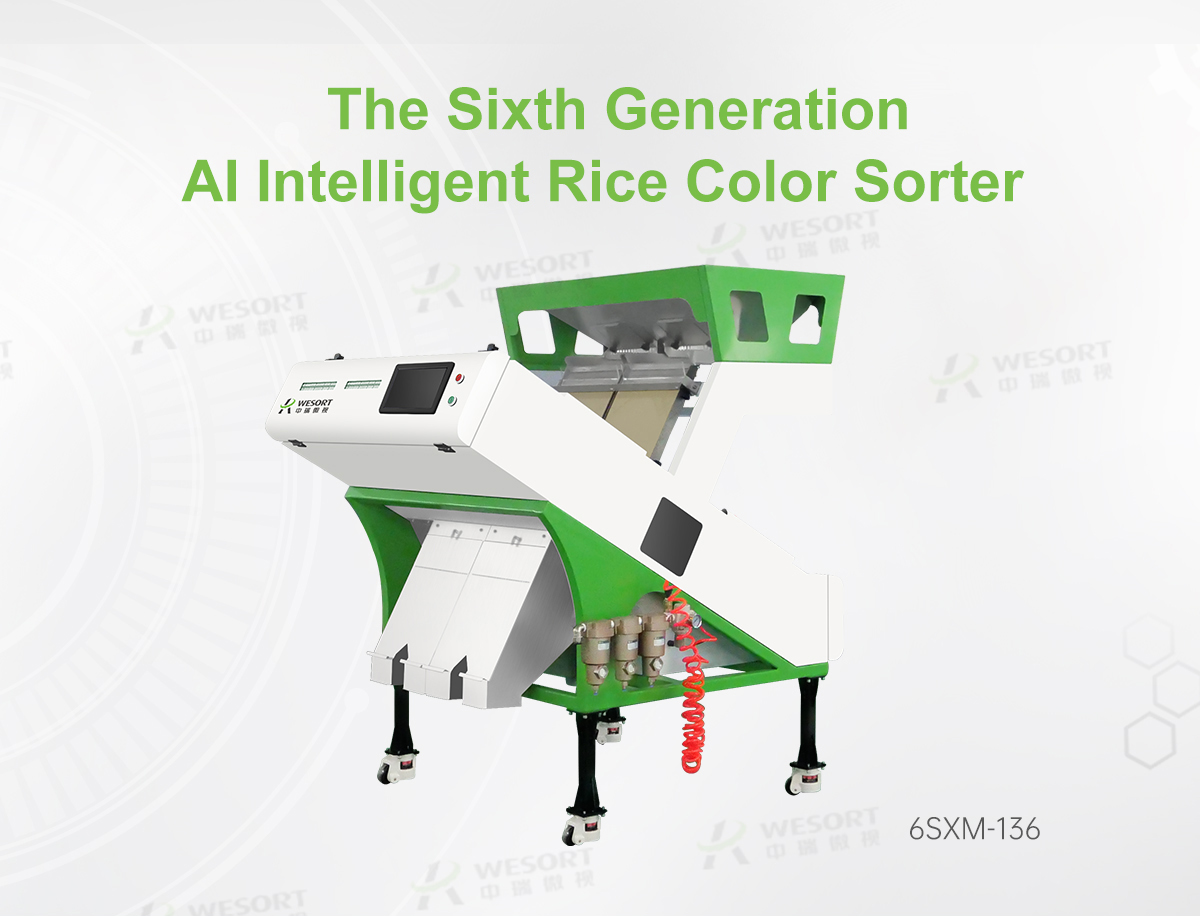
An optical rice sorter improves purity by turning visible differences into controlled separation decisions. Stable feeding presents the rice, illumination and cameras capture visible characteristics, software evaluates color and shape, and precisio...
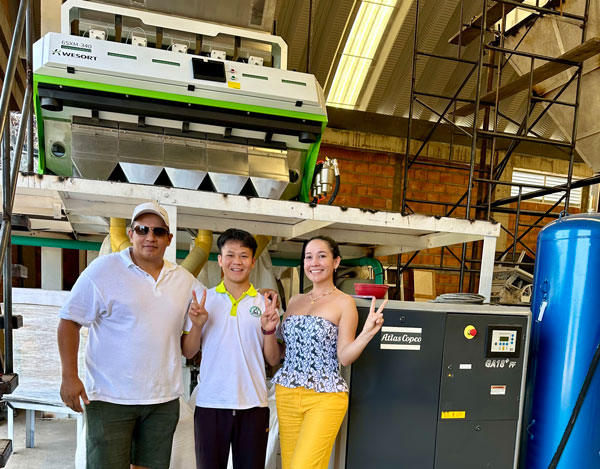
Choose a rice sorting machine by matching the rice variety, target defects, required throughput, finished-product standard, acceptable loss of good rice, and site utilities. Compare machines only after testing representative material and reviewing bo...
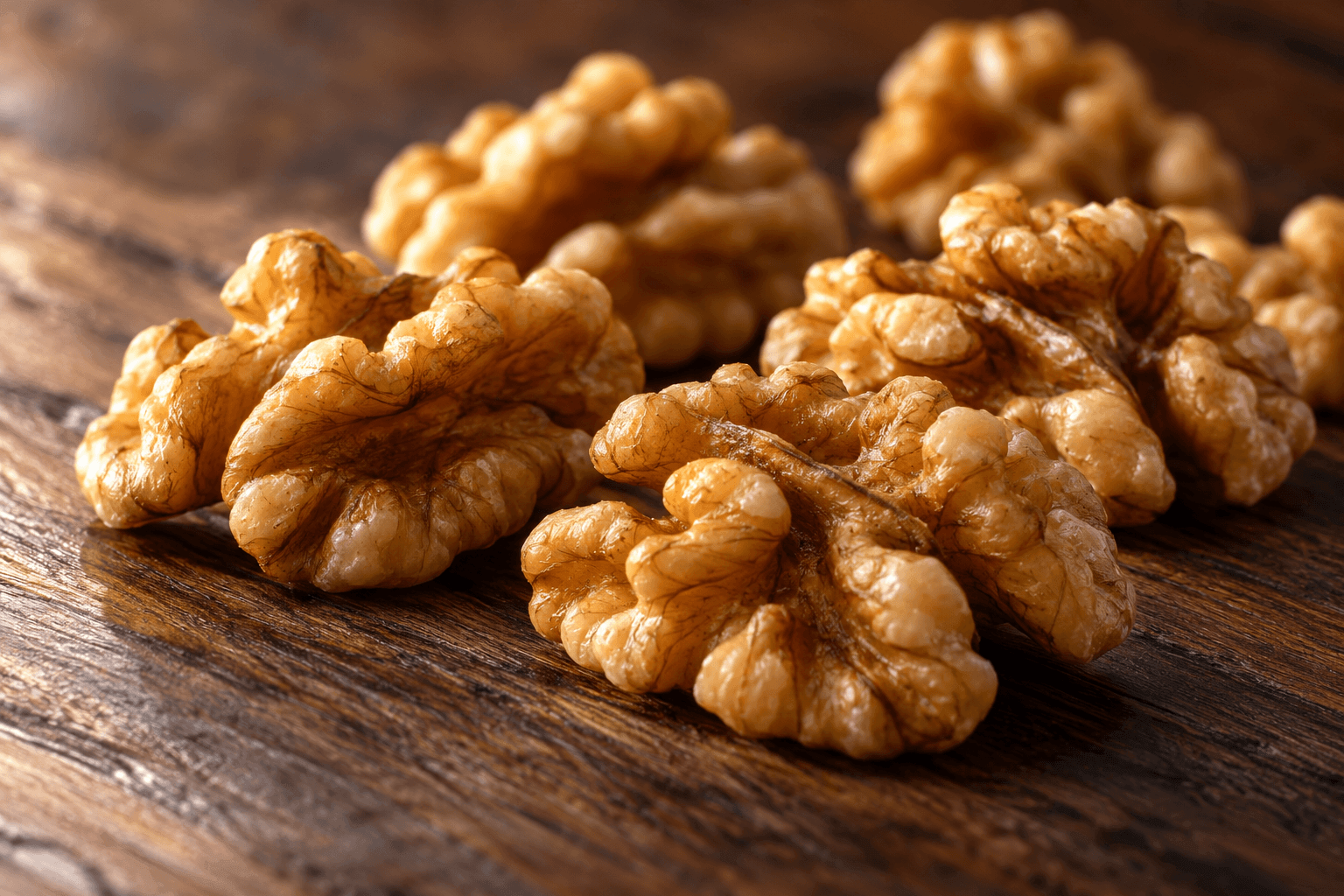
A walnut sorting machine is not an isolated purchase. It sits inside a sequence that starts with cracking and ends with a documented grade in the packing room. When each stage has a clear job, the plant can protect kernel recovery, remove visible def...

After cracking, walnut processors need to solve two different problems: remove shell efficiently and protect the kernels that carry the selling value. The strongest solution is usually a staged process that combines mechanical separation, infrared sh...
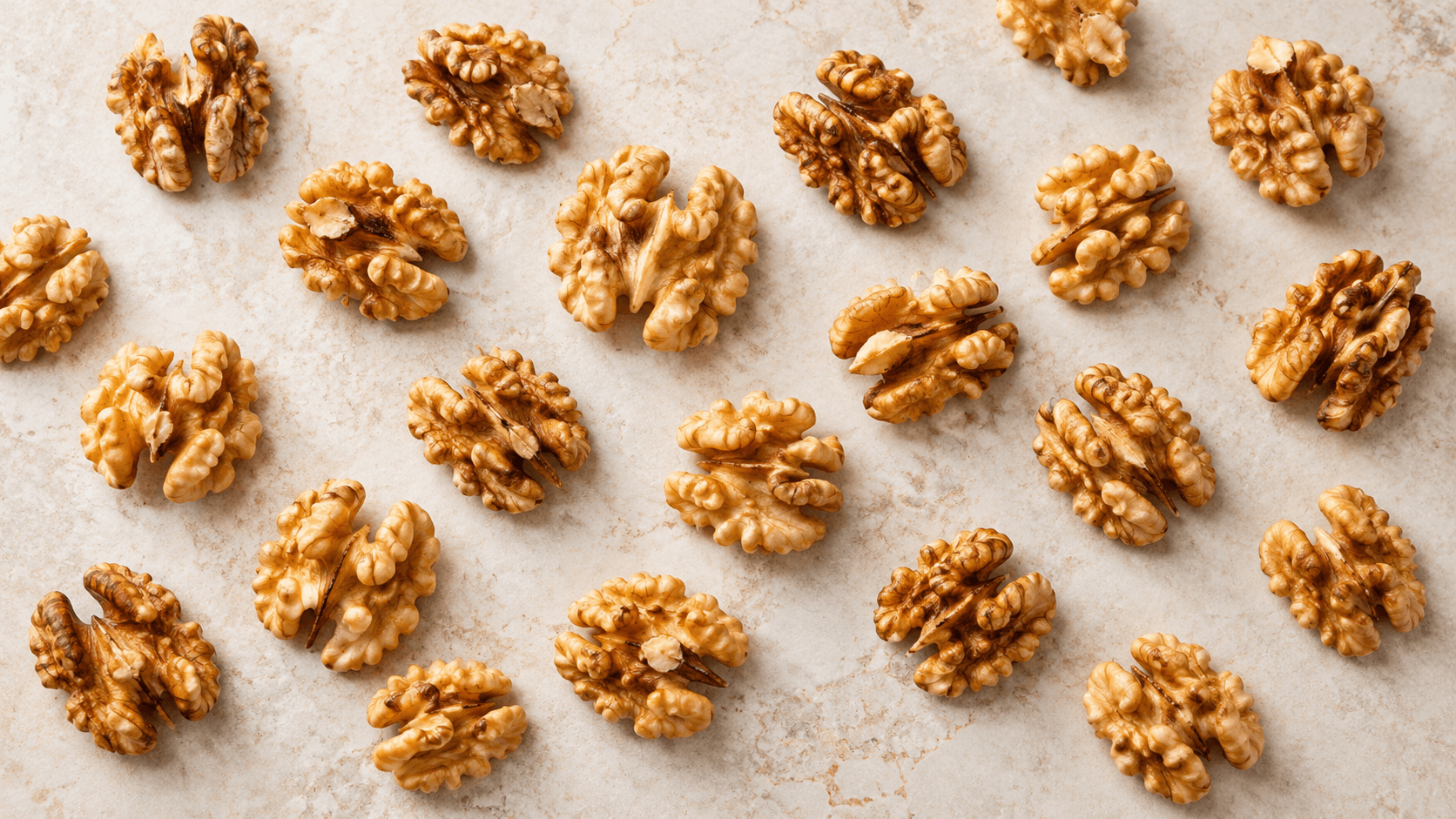
Black, moldy and discolored walnut kernels are not simply “bad colour.” They may represent different grades, different causes and different commercial decisions. WESORT’s AI walnut kernel color sorter converts those visible quality rules into repeata...
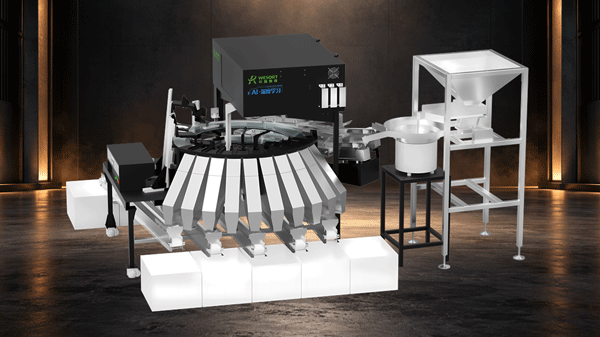
Walnut kernels are commonly sorted with an optical AI sorting machine after cracking, shell separation and preliminary cleaning. The best configuration depends on whether the plant needs colour sorting, visible defect removal, multi-grade separation,...
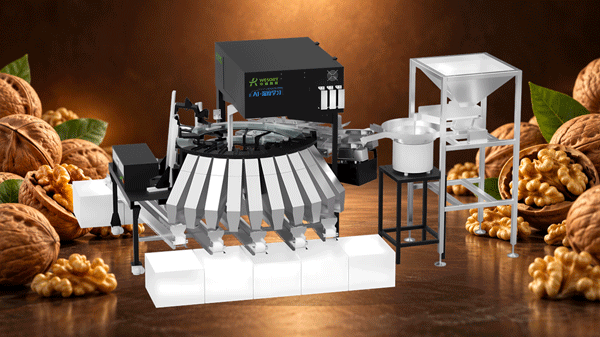
A walnut kernel sorter should do more than remove dark pieces. It should protect valuable halves, separate commercial grades, recognise the visible defects that affect your selling price and fit the way your plant already cracks, cleans, grades and p...
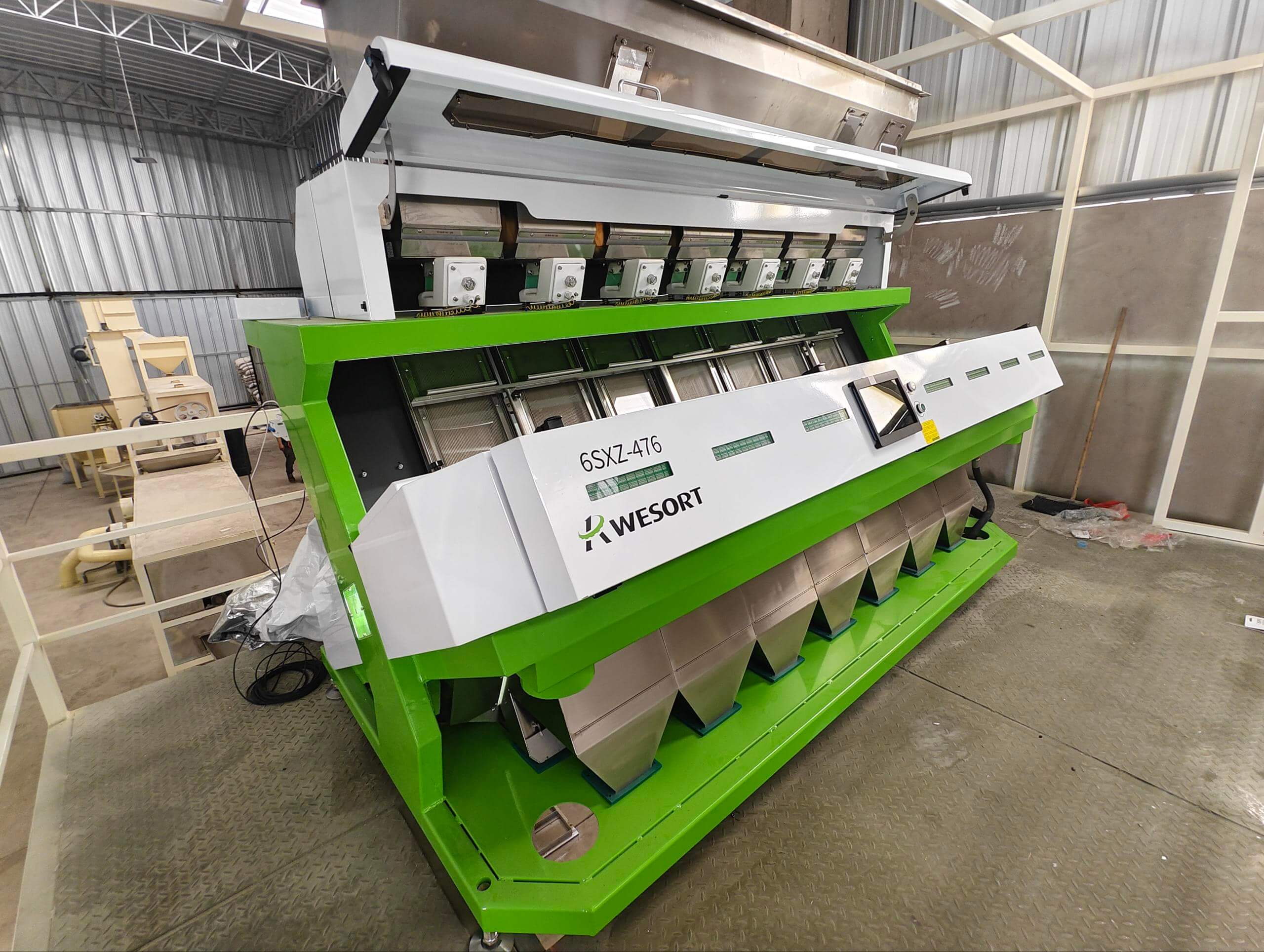
The best bean-sorting result does not begin with a machine setting. It begins with a clear description of the beans you want to pack, the defects your buyer rejects and the amount of good product you are prepared to lose. Short answer: clean and s...

When nut processing enters its busiest weeks, inconsistent raw material, visible defects and foreign materials can quickly become production problems. For processors handling hazelnuts, pistachios, almonds, pecans, Brazil nuts, peanuts and other nut...
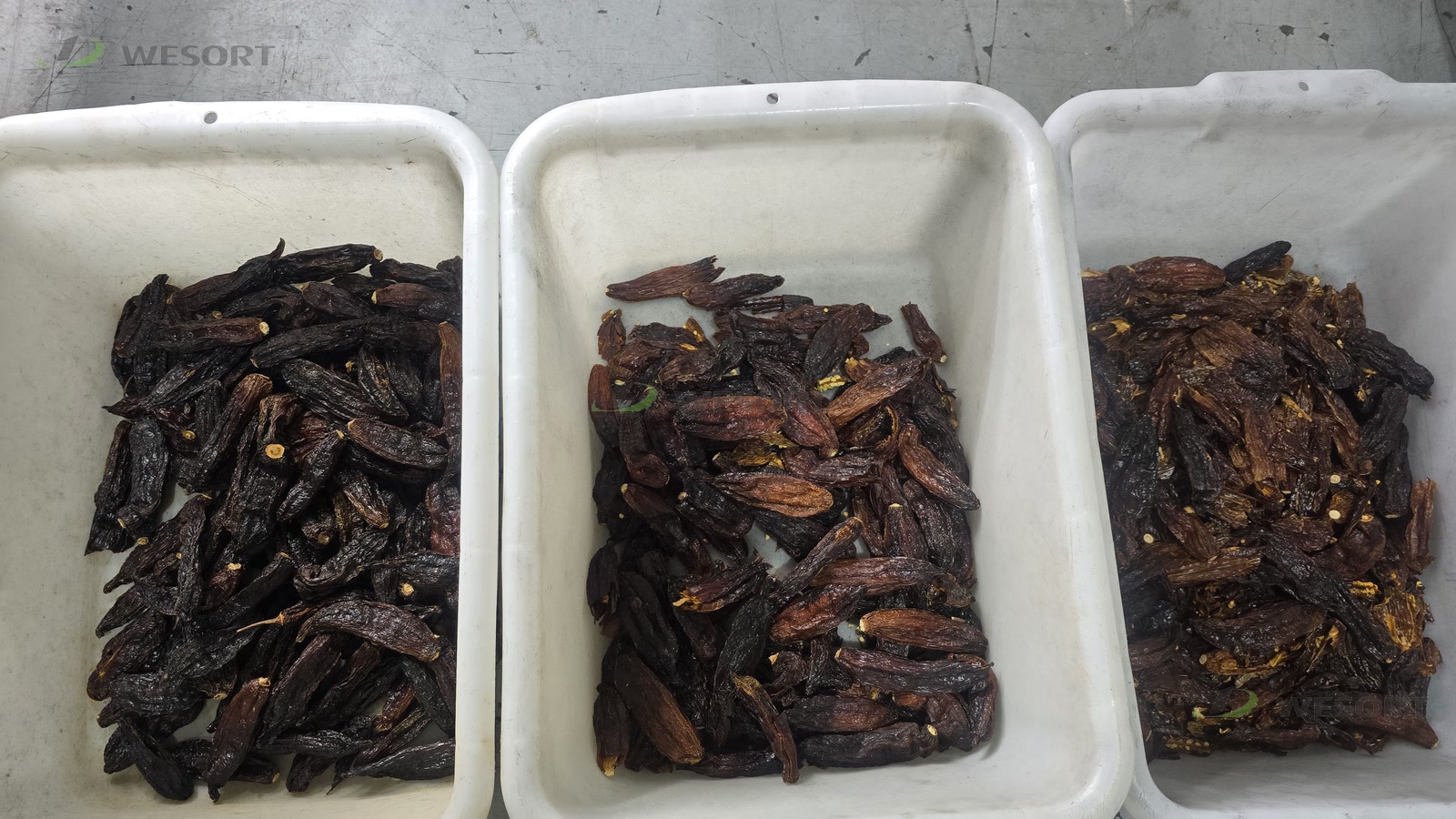
A mixed lot of dried chili rarely has just one problem. Dark pods sit beside red-brown pods, whole product is mixed with broken pieces, and stems or fibrous material remain in the flow. WESORT helps processors turn that mixed lot into clearly defin...
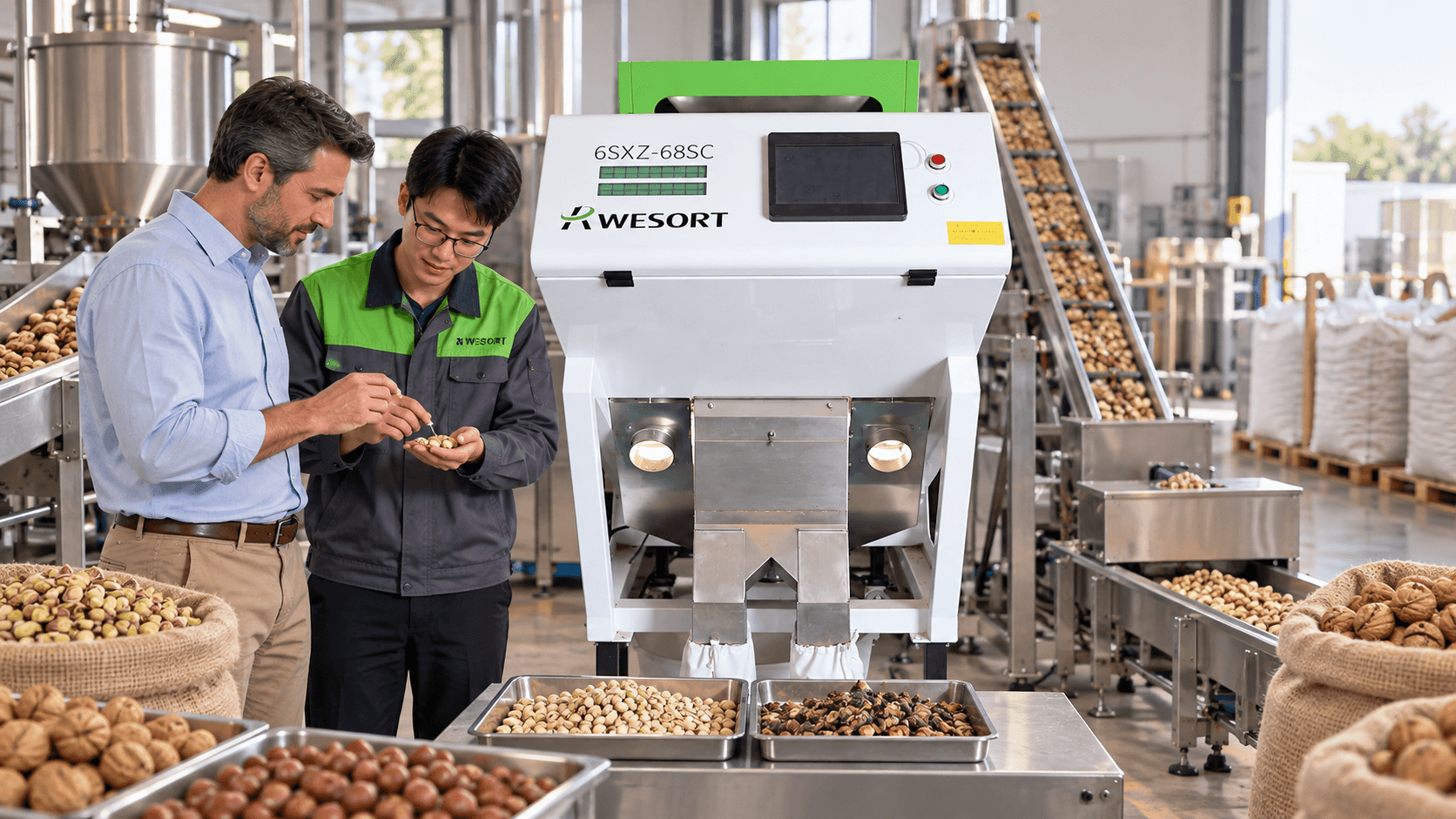
A reliable nut color sorter manufacturer should be able to prove three things before asking you to buy: that your actual material can be separated, that the proposed machine fits your production line, and that technical support will still be availa...
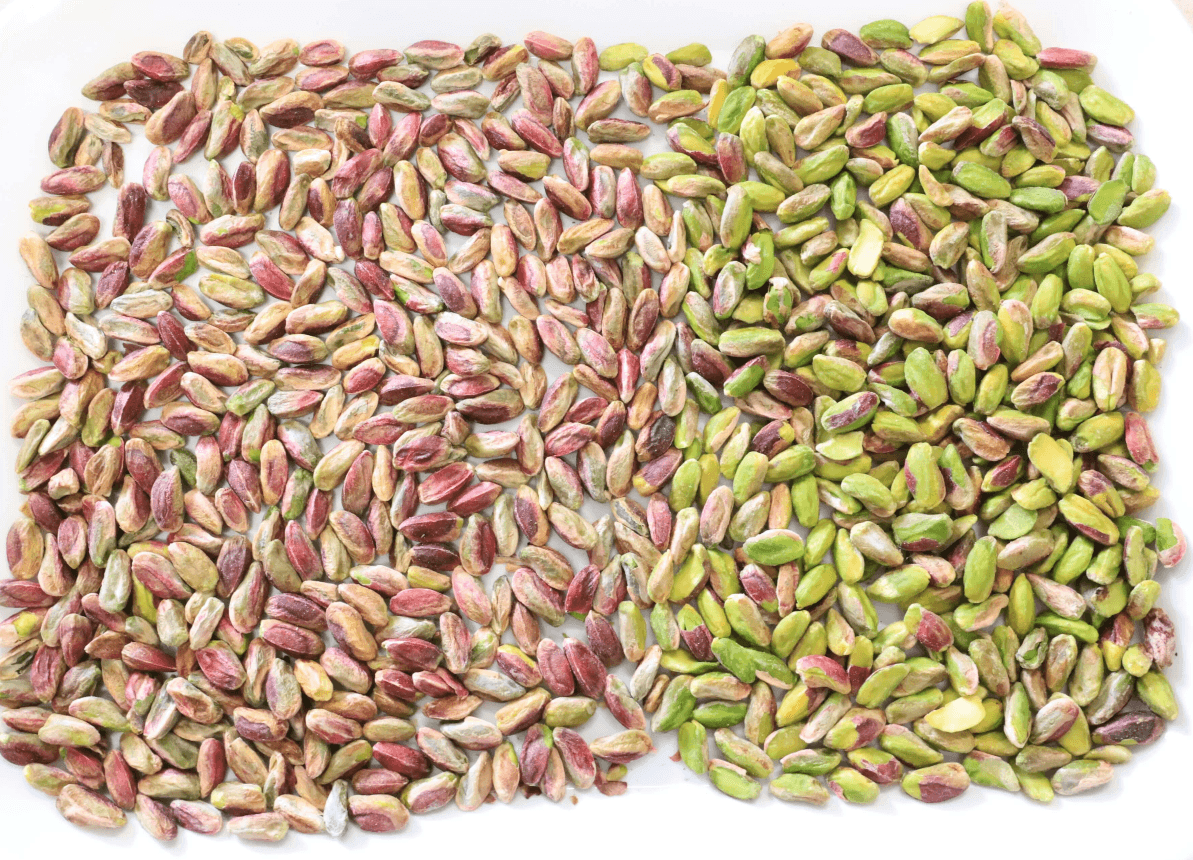
A pistachio sorter should be configured for the material entering it, not for the word “pistachio” alone. An in-shell line may need to separate open and closed shells. A kernel line may need color grades and removal of broken or dark pieces. A post...
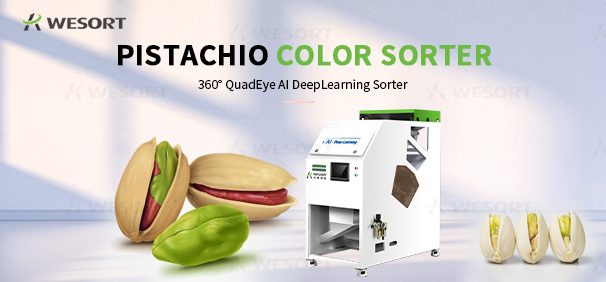
Choosing the right pistachio sorting machine in Turkey is not simply a matter of comparing machine width, number of chutes or advertised capacity. For pistachio processors, the more important question is: What exactly does the machine need to sep...

Choosing a coffee sorting machine in Colombia should not begin with the number of chutes or a headline capacity. It should begin with five facts about the coffee entering your line and the product you need to deliver. Without them, two machines th...
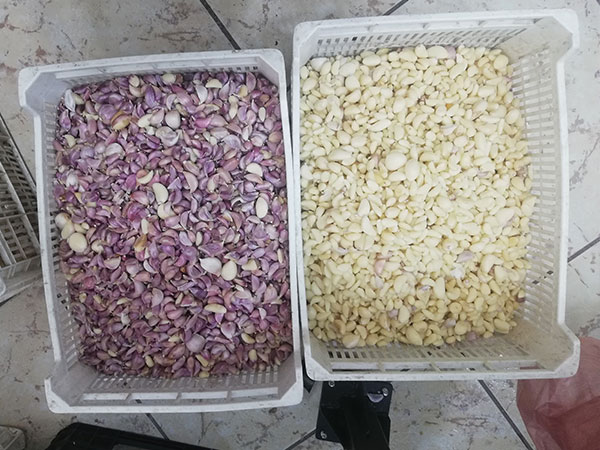
A garlic sorting machine can separate cloves that differ visibly from the accepted product in color, skin coverage, shape, size or surface condition. Typical targets include cloves with attached purple skin, incomplete peeling, yellow or brown disc...

Don’t bring only a business card. Bring the coffee your team is struggling to sort. From October 15 to 18, WESORT will be at Cafés de Colombia Expo 2026 in Bogotá. At Booth 2466, visitors can see how optical sorting responds to real coffee material...
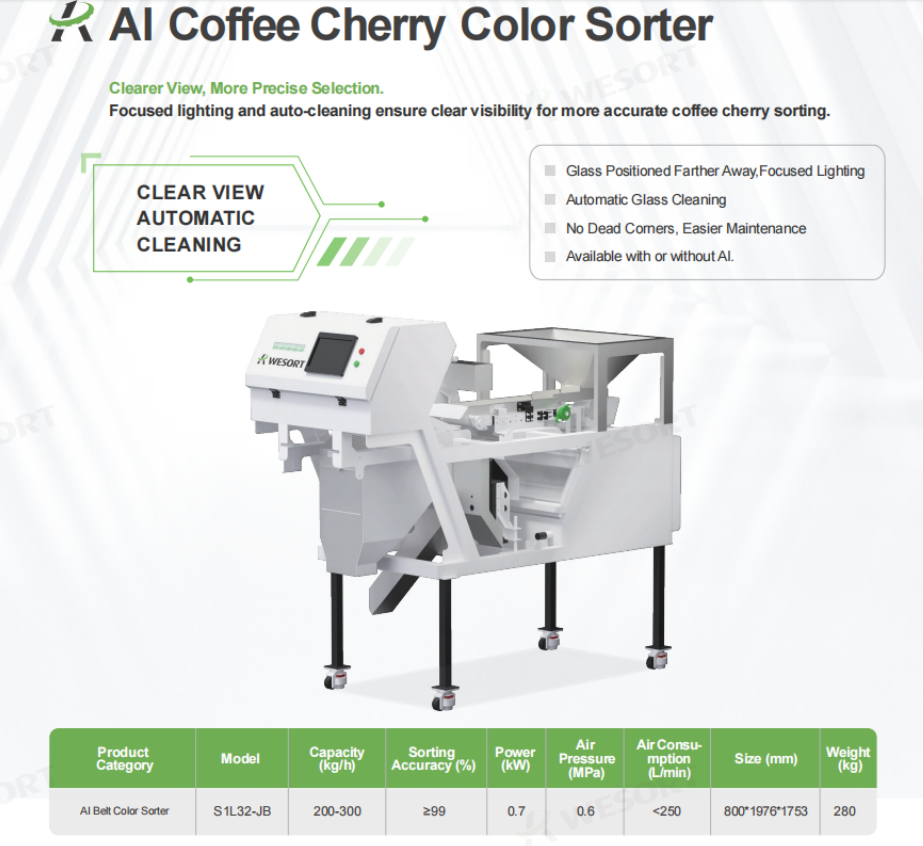
Industry Background and Problem Introduction Coffee processing combines natural variation in agricultural material with increasingly specific buyer and quality requirements. Fresh coffee cherries, parchment coffee, green beans and roasted beans are d...
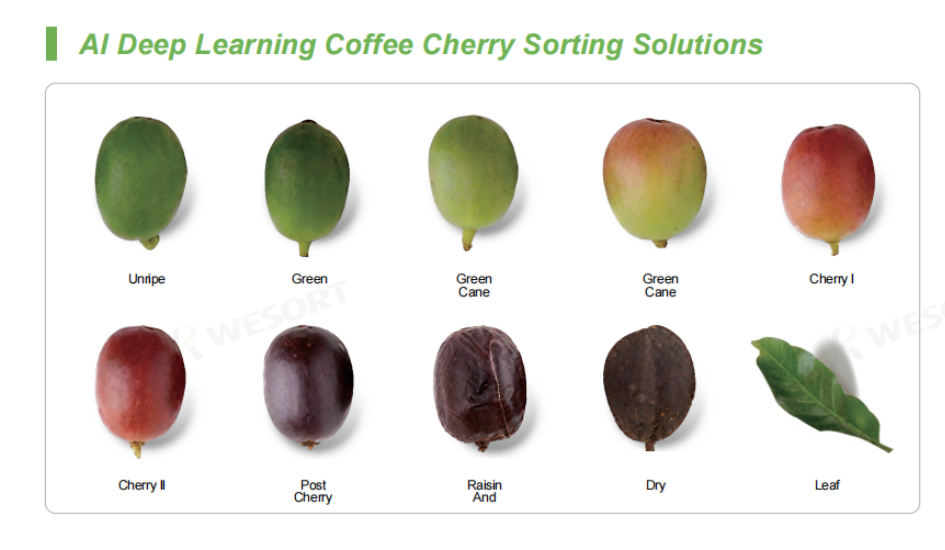
Sorting fresh coffee cherries before pulping or drying can help a processor separate visibly different fruit into more consistent lots. The right approach depends on the cherries, the acceptance standard and where the sorter will sit in the processin...
Every Pearl, Every Angle. 360° PANORAMIC AI PEARL SORTING The hardest part of pearl sorting is not seeing a pearl once. It is seeing enough of its surface to make a consistent decision. A dark spot may sit on the back. A fine crack may become visible...
A practical way to choose a corn sorting machine is to compare your plant with corn processors that have already solved similar problems. WESORT has supplied corn sorting solutions for different production scales, from a dual-channel white-corn pro...
An optical rice sorter improves purity by turning visible differences into controlled separation decisions. Stable feeding presents the rice, illumination and cameras capture visible characteristics, software evaluates color and shape, and precisio...
Choose a rice sorting machine by matching the rice variety, target defects, required throughput, finished-product standard, acceptable loss of good rice, and site utilities. Compare machines only after testing representative material and reviewing bo...
A walnut sorting machine is not an isolated purchase. It sits inside a sequence that starts with cracking and ends with a documented grade in the packing room. When each stage has a clear job, the plant can protect kernel recovery, remove visible def...
After cracking, walnut processors need to solve two different problems: remove shell efficiently and protect the kernels that carry the selling value. The strongest solution is usually a staged process that combines mechanical separation, infrared sh...
Black, moldy and discolored walnut kernels are not simply “bad colour.” They may represent different grades, different causes and different commercial decisions. WESORT’s AI walnut kernel color sorter converts those visible quality rules into repeata...
Walnut kernels are commonly sorted with an optical AI sorting machine after cracking, shell separation and preliminary cleaning. The best configuration depends on whether the plant needs colour sorting, visible defect removal, multi-grade separation,...